
What is lining? A detailed explanation of fluororesin lining.


![[Free Offer] Coating Sample! Experience Kit Here](https://image.mono.ipros.com/public/premium/image_category/c19/1260/IPROS86266474934566858653.jpeg?w=140&h=140)


We are currently offering detailed materials explaining fluororesin lining, which is particularly excellent in chemical resistance among linings.
■What is Lining? Lining is a method of protecting a substrate with a relatively thick film to enhance corrosion resistance. The lining materials primarily used are "rubber," "resin," and "glass." In linings that require corrosion resistance, a coating without pinholes is crucial. ■What is Fluororesin Lining? Fluororesin lining is one type of "resin lining." Resin lining includes those utilizing "polyethylene" and "nylon" resins, as well as "FRP lining," which combines glass fibers and resin. Among these, "fluororesin" is a material that is less susceptible to chemicals in harsh environments. ■Types of Fluororesin Lining Types of fluororesin lining include PTFE lining, PFA lining, and ETFE lining. Each lining requires appropriate selection based on the usage environment, method, and application. ■Main Fluororesin Lining Methods There are three main methods: 1. "Sheet Lining" 2. "Baked Coating" 3. "Roto Lining" *When considering lining, please check the materials and contact us for inquiries.
basic information
■Various Lining Methods At Yoshida SKT, we can accommodate various processing methods depending on the shape and thickness of the material, not only based on material differences but also using "sheet lining" with fluororesin sheets, "PFA lining" with baked coatings, and "rotolining" with rotational molding. 【Yoshida SKT's Lining】 - PFA Baked Lining - ETFE Baked Lining - PTFE Sheet Lining - PFA Sheet Lining - Modified PTFE Lining - Rotolining - MY Lining We offer a variety of lining processing options.
Price information
-
Delivery Time
Applications/Examples of results
For more details, please contact us.
Related Videos
catalog(2)
Download All Catalogs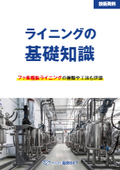

News about this product(2)
-

◆Yoshida SKT Co., Ltd.◆ NEW "The Advantages and Disadvantages of Fluororesin Coating Linings" has been released.
Here are the advantages and disadvantages of fluororesin baked linings. Fluororesin baked linings, like fluororesin coatings, are formed by painting and firing. We are currently offering detailed materials that explain fluororesin linings, which are particularly excellent in chemical resistance. Please be sure to check them along with our product site. 【Contents of the materials】 1. What is lining? 2. Materials and characteristics of lining 2-1. Rubber materials 2-2. Resin materials 2-3. Glass materials 3. Chemical resistance of fluororesin linings 3-1. What is chemical resistance? 3-2. Effects of chemicals on resins 3-3. Mechanism of chemical resistance in fluororesins 3-4. Examples of applications utilizing chemical resistance 4. Methods and materials for fluororesin linings 4-1. Sheet lining 4-2. PFA lining 4-3. Comparison of characteristics by lining method If you are interested, please download the materials and check them out.
-

◆Yoshida SKT Co., Ltd.◆ NEW "What is Lining? A Detailed Explanation of Fluororesin Lining" has been released.
Lining is a construction method that protects the substrate with a relatively thick film. Lining materials mainly consist of "rubber," "resin," and "glass." We are currently offering detailed materials explaining fluororesin lining, which is particularly excellent in chemical resistance among linings. Please be sure to check it out along with our product site. 【Contents of the materials】 1. What is lining? 2. Materials and characteristics of lining 2-1. Rubber materials 2-2. Resin materials 2-3. Glass materials 3. Chemical resistance of fluororesin lining 3-1. What is chemical resistance? 3-2. Effects of chemicals on resin 3-3. Mechanism of chemical resistance in fluororesin 3-4. Examples of applications utilizing chemical resistance 4. Methods and materials for fluororesin lining 4-1. Sheet lining 4-2. PFA lining 4-3. Comparison of characteristics by lining method If you are interested, please download the materials and check them out.
Recommended products


Distributors

To maximize the performance of manufacturing equipment and machine parts, Yoshida SKT derives the "optimal solution" tailored to our customers from hundreds of surface treatment technologies. - Decreased productivity due to adhesive troubles - Instability in product quality due to friction - Early deterioration of equipment due to corrosion We respond to these challenges in the manufacturing field with our extensive track record and reliable technical expertise. In 1963, we began fluoropolymer processing. In 1968, we signed a licensing agreement with DuPont (now Chemours), supporting manufacturing innovations for over 2,000 customers across various industries, from automotive to medical and aerospace. Furthermore, in 2024, we are focusing on the development of next-generation products, such as PFAS-free coatings, contributing to the advancement of sustainable manufacturing. With a three-base system in Nagoya, Tokyo, and Yamaguchi, we flexibly respond to both mass production and custom orders. Our consistent quality management system ensures that we deliver reliable quality. For solving challenges in the manufacturing field, trust the surface treatment experts at Yoshida SKT.