
Why does resin stick to the mold? The mechanism behind adhesion and release failure.


![[Free Offer] Coating Sample! Experience Kit Here](https://image.mono.ipros.com/public/premium/image_category/c19/1260/IPROS86266474934566858653.jpeg?w=140&h=140)


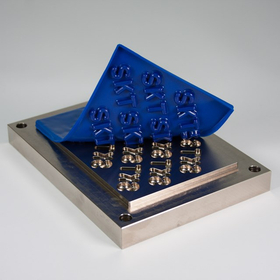
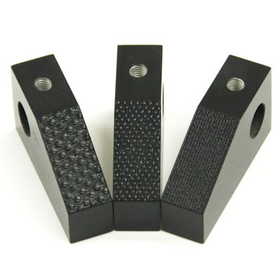
"Even with the use of release agents, the resin sticks to the mold..." This phenomenon is related to surface energy. We will introduce the mechanism of adhesion and the direction of countermeasures.
■Why "Sticking" Occurs When substances come into contact, a force that attracts them at the molecular level is generated due to the action of surface energy (surface tension). If the energy of the mold surface is high, molten resin or rubber is drawn to the mold surface, making it difficult to detach even after cooling and solidification. ■Cases Where Release Agents Alone Do Not Provide a Fundamental Solution Release agents are effective as a temporary measure, but they need to be applied each time a shot is made. Additionally, the components of the release agent can transfer to the product, leading to quality issues. ■Permanent Solutions Through Surface Treatment By applying surface treatment that lowers the energy of the mold surface, it is possible to ensure stable release properties even without a release agent. We have introduced a typical mechanism of release failure, but the causes of sticking vary depending on the type of resin, shape, molding temperature, pressure, and other factors at each site. The information provided is not exhaustive, and it is not uncommon for multiple factors to be intertwined. At Yoshida SKT, we carefully listen to our customers' molding conditions and materials to propose the optimal surface treatment. If you are struggling with release issues, please feel free to consult with us.
basic information
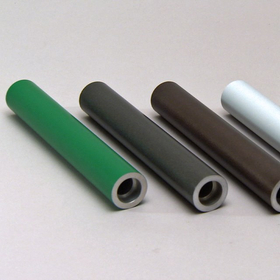
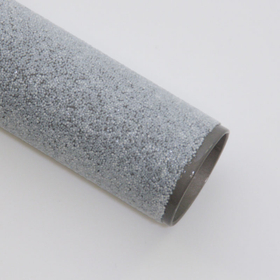
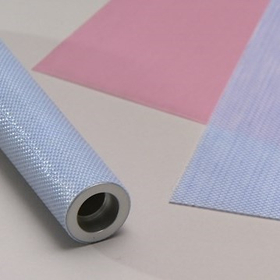
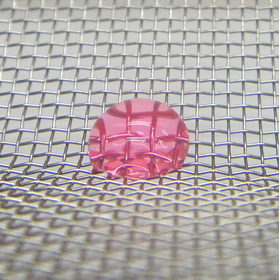
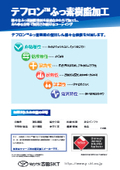
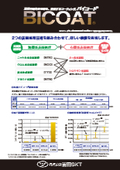
【Surface treatments (coatings) excellent for release】 ■ Non-stick, lubricity, heat and cold resistance, chemical resistance, water and oil repellency, electrical properties 'Teflon (TM) fluoropolymer coating' ■ Release properties, high hardness, dimensional stability, lubricity, wear resistance 'Bicoat (R)' ■ Resin release at high temperatures - FSR coating ■ Prevention of adhesion of highly sticky substances - Adhesive release coating - CTT fabric sheet - MRS coating (silicone-based coating) 【Other selected coatings (partial)】 ■ Release properties, precision, water repellency, oil repellency, liquid slip (precision parts, precision molds) - Nano process *For more details, please refer to the PDF document or feel free to contact us.
Price range
Delivery Time
Applications/Examples of results
Please feel free to contact us.
Related Videos
catalog(8)
Download All Catalogs



Recommended products


Distributors

To maximize the performance of manufacturing equipment and machine parts, Yoshida SKT derives the "optimal solution" tailored to our customers from hundreds of surface treatment technologies. - Decreased productivity due to adhesive troubles - Instability in product quality due to friction - Early deterioration of equipment due to corrosion We respond to these challenges in the manufacturing field with our extensive track record and reliable technical expertise. In 1963, we began fluoropolymer processing. In 1968, we signed a licensing agreement with DuPont (now Chemours), supporting manufacturing innovations for over 2,000 customers across various industries, from automotive to medical and aerospace. Furthermore, in 2024, we are focusing on the development of next-generation products, such as PFAS-free coatings, contributing to the advancement of sustainable manufacturing. With a three-base system in Nagoya, Tokyo, and Yamaguchi, we flexibly respond to both mass production and custom orders. Our consistent quality management system ensures that we deliver reliable quality. For solving challenges in the manufacturing field, trust the surface treatment experts at Yoshida SKT.