
Why do powders clog in pipes and hoppers? The mechanisms of adhesion and bridging.


![[Free Offer] Coating Sample! Experience Kit Here](https://image.mono.ipros.com/public/premium/image_category/c19/1260/IPROS86266474934566858653.jpeg?w=140&h=140)


"The powder does not come out of the hopper" and "it gets clogged in the piping." The causes are not just one. This explains the typical mechanisms of clogging and the countermeasures.
■Three Main Mechanisms of Powder Clogging (1) Adhesion to Walls Powder particles adhere to the inner walls of hoppers and pipes, narrowing the flow path and worsening the flow. The causes vary, including adhesion due to static electricity, moisture, and the physical adhesion of sticky powders. (2) Agglomeration of Particles Due to humidity and temperature influences, particles may stick together and form clumps. Agglomerated powders significantly reduce flowability and can block pipes and valves. (3) Bridging This phenomenon occurs when powder forms an arch-like structure (bridge) near the outlet of a hopper, becoming stable under its own weight. The particle size distribution, shape, and friction with the wall all affect this. ■Approach to Solutions To prevent powder clogging, one effective method is to reduce the friction of the wall surfaces that the powder contacts, thereby lowering adhesion forces. Particularly when static electricity is a cause of adhesion, surface treatments with anti-static functions are effective. The causes of powder clogging can vary with even slight differences in the environment. At Yoshida SKT, we propose optimal surface treatments based on the conditions provided by our customers. If you encounter issues with powder transport, please feel free to consult us.
basic information
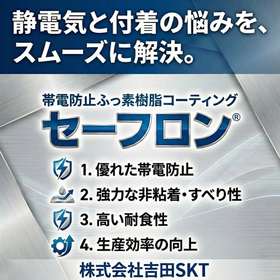
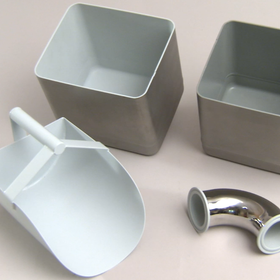
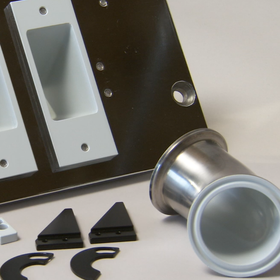
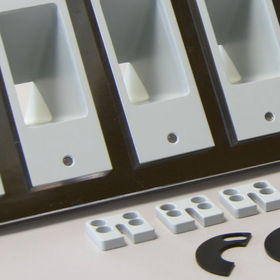
"Safron(R)" is an anti-static fluororesin coating that enables charge dissipation by directing charges generated on the coating surface to the substrate metal or ground. It reduces static electricity troubles caused by fluororesin coatings and provides functions such as "preventing adhesion," "enhancing slip," and "improving corrosion resistance." Additionally, it improves production efficiency in various settings by preventing product troubles caused by material sticking and lightening the cleaning tasks for adhered substances. 【Features】 ■ Anti-static properties of the coating surface ■ Excellent release from adhesives, preventing or making it difficult for them to stick ■ Improved lubricity due to the low friction coefficient of the fluororesin coating ■ Prevents poor flow and clogging in transport guides, chutes, pipes, etc., by processing them ■ Protects tanks and stirring blades that come into contact with chemicals, enhancing safety and durability *For more details, please refer to the PDF document or feel free to contact us.
Price information
Please feel free to contact us.
Delivery Time
Model number/Brand name
SAFELON
Applications/Examples of results
【Applications】 ■ Weighing hopper ■ Extrusion screw ■ Chemical-resistant tank ■ Agitator blade ■ Strainer ■ Housing ■ Pump ■ Valve ■ Piping (straight pipe, T-pipe, elbow, reducer) ■ Helical piping ■ Paint ■ Ink container ■ Wafer chuck ■ Coater nozzle ■ Ink and adhesive pan ■ Cleaning chamber ■ Roll ■ Product protection guide ■ Centrifuge, etc... *For more details, please refer to the PDF document or feel free to contact us.
Related Videos
catalog(2)
Download All Catalogs

Recommended products



Distributors

To maximize the performance of manufacturing equipment and machine parts, Yoshida SKT derives the "optimal solution" tailored to our customers from hundreds of surface treatment technologies. - Decreased productivity due to adhesive troubles - Instability in product quality due to friction - Early deterioration of equipment due to corrosion We respond to these challenges in the manufacturing field with our extensive track record and reliable technical expertise. In 1963, we began fluoropolymer processing. In 1968, we signed a licensing agreement with DuPont (now Chemours), supporting manufacturing innovations for over 2,000 customers across various industries, from automotive to medical and aerospace. Furthermore, in 2024, we are focusing on the development of next-generation products, such as PFAS-free coatings, contributing to the advancement of sustainable manufacturing. With a three-base system in Nagoya, Tokyo, and Yamaguchi, we flexibly respond to both mass production and custom orders. Our consistent quality management system ensures that we deliver reliable quality. For solving challenges in the manufacturing field, trust the surface treatment experts at Yoshida SKT.