
All products and services
31~60 item / All 243 items
-

Why does uneven gloss occur in stainless steel paint? Reviewing drying conditions.
Variations in gloss that appear different in certain areas. This is caused by fluctuations in drying temperature and wind speed.
last updated
-

Three on-site checks to prevent foreign matter contamination in stainless steel.
Defects on the painted surface directly lead to complaints. We will explain the key points of on-site management to prevent foreign matter contamination.
last updated
-

Key points for temperature and film thickness management to prevent color unevenness in stainless steel.
Color unevenness that appears different despite being the same paint. It is caused by variations in temperature distribution and film thickness.
last updated
-
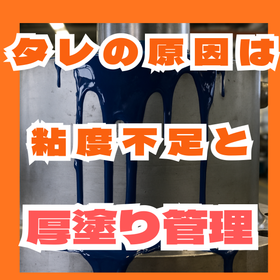
Why does stainless steel coating run? The relationship between viscosity and film thickness.
The defect is not necessarily due to the operator's mistake. We will explain the points for reviewing viscosity management and film thickness settings.
last updated
-

Why do stainless steel blisters occur? Basics of moisture management.
Blistering of the coating is caused by moisture and oil. We will explain the specific precautions and measures for stainless steel.
last updated
-
Three pre-treatment checks to prevent peeling of stainless steel paint.
Stainless steel's passive film hinders adhesion. Here are three checkpoints for pre-treatment to prevent peeling.
last updated
-

The measures against pinholes in stainless steel start with a review of degreasing and drying.
The pinholes in stainless steel coating are caused by insufficient degreasing and drying. I will explain the key points for reviewing the pretreatment process.
last updated
-

Quality control measures for metal baked coatings during the summer.
I have summarized the issues that are likely to occur from the rainy season to summer and the management system for them.
last updated
-

The reason blisters increase in summer is due to moisture and temperature.
Even if the products are in good condition at the time of shipment, blisters are likely to appear a few weeks later during the summer. This explains the causes and countermeasures.
last updated
-

Storage of materials before painting is suffering from condensation in summer.
The materials left before painting are rusting due to condensation. This explains the storage troubles unique to summer.
last updated
-

What happens when you reduce the drying time for de-oiling in summer.
In summer, it feels like things dry quickly, but in reality, moisture remains. I will explain the risks of shortening the drying time after degreasing.
last updated
-

Humidity management measures for metal baking paint.
I have summarized the basics of humidity management from the rainy season to summer. This directly relates to the prevention of pinholes and rust.
last updated
-

Explaining the relationship between temperature and viscosity that makes it easy to drizzle in summer.
As the temperature rises, the viscosity of the paint decreases and the amount of dripping increases. We will explain the measures against dripping in summer with numbers.
last updated
-

The temperature difference inside the summer baking furnace disturbs the film thickness.
In the summer when the outside temperature rises, temperature variations inside the furnace lead to issues with film thickness. This explains the causes and management methods.
last updated
-

Why does rust occur right after preprocessing? The pitfall of the rainy season.
Rust immediately after preprocessing may actually be caused by condensation in the factory. We will explain measures for the rainy season to summer.
last updated
-

The unevenness of summer is crying out from being too dry.
When the temperature is high, the evaporation of the solvent is too fast, resulting in uneven gloss. This explains the causes and countermeasures for the gloss unevenness typical of summer.
last updated
-

Standardization and documentation to reduce defects at painting sites with labor shortages.
It is important to manage preprocessing, film thickness, and baking conditions through records, rather than relying solely on the intuition of skilled practitioners.
last updated
-

In an era where the adoption of aluminum parts is advancing, the concept of substrate management to prevent paint peeling.
In the lightweight automotive parts, the adhesion of aluminum coatings and the management of pre-treatment become important.
last updated
-

With the rising cost of raw materials, what is quality control in metal coating to reduce repainting losses?
In an era where paint, energy, and labor costs are rising, effective process management to reduce repainting is essential.
last updated
-

Why are surface conditioners important? The pre-treatment process that affects the adhesion of aluminum coatings.
Surface treatment agents are essential pre-treatments to prevent poor adhesion and peeling of aluminum coatings.
last updated
-

Three points for pre-treatment to prevent poor adhesion of aluminum die-cast coating.
Peeling of aluminum die-cast paint occurs due to insufficient management of oil content, voids, and surface conditions.
last updated
-

Is the reason for the sauce not stopping just viscosity? The pitfalls of film thickness and component posture.
Paint drips are more likely to occur when the three conditions of viscosity, film thickness, and component orientation are disrupted.
last updated
-
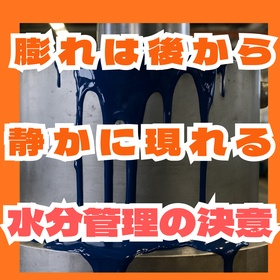
What is paint failure that swells a few months later? The importance of moisture management to prevent blisters.
The swelling of the paint film that is not visible at the time of shipment may be caused by moisture residue after pretreatment.
last updated
-

Why does the paint peel off immediately? A review of the three pre-treatment processes to stop poor adhesion.
The peeling of paint is not just a problem with the paint itself, but is determined by the accumulation of degreasing, cleaning, and drying processes.
last updated
-
Three conditions for preventing poor curing that causes stickiness in paint.
Stickiness is not a minor discomfort; it is a serious quality defect caused by insufficient curing or excessive film thickness.
last updated
-

Why do small holes appear in the paint? Three overlooked causes that lead to pinhole defects.
The small hole that appears as a pinhole is a paint defect caused by the overlap of oil, moisture, and material condition.
last updated
-

Is 70% of foreign matter contamination brought in by 'people'? Dust prevention measures in painting booths.
Even after replacing the filter, the debris doesn't decrease. The truth about work clothes and the attraction of foreign objects due to static electricity, which tends to be overlooked.
last updated
-

An unexpected reason for color unevenness! The hidden traps of metallic paint.
Even though the same paint is used, the color changes between batches. This is a common cause of color variation in metallic coatings for automotive parts.
last updated
-

Is the "dripping" in painting the worker's fault? Traps caused by the environment and viscosity.
The issue of paint defects cannot be resolved solely by how to operate the spray gun. We delve into the close relationship between temperature and thinner dilution ratio.
last updated
-

Why does rust reoccur? The fear of "invisible moisture" lurking inside metals.
Even after removing rust and repainting, it rusts again after a few months. The mechanism of rust recurrence that troubles the site and how to break the cycle.
last updated