


Product Categories



Featured products


Products/Services(116items)
-
What is the principle of ultrasonic cleaning? An explanation from the mechanism of frequency to equipment selection and operation.
-
Flux cleaner
-
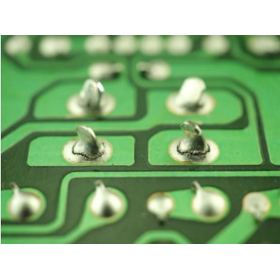
10 Examples of Substrate Defects: An Explanation from Cause Analysis to Recurrence Prevention Measures
-
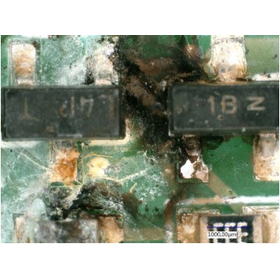
Causes and Countermeasures of Substrate Corrosion | Explanation from Mechanism of Occurrence to Analysis Methods
-
Basic Knowledge of Data Analysis
news list
-
A page for "FT-IR Analysis Services" has been added.
In manufacturing sites and product development, invisible contaminants and unidentified foreign substances can lead to significant quality issues. The technology that can identify the chemical structure of organic substances in response to these challenges is "FT-IR analysis (Fourier Transform Infrared Spectroscopy)." FT-IR analysis is a fundamental analytical method widely used in chemical analysis, characterized by its ability to perform non-destructive measurements repeatedly and to identify organic compounds with high precision. This article will explain the principles and features of FT-IR analysis, the measurement targets and methods, as well as case studies and how it differs from other methods.
-
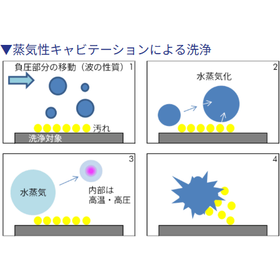
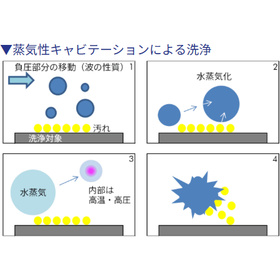
We have added a page explaining the principles of ultrasonic cleaning, from the mechanism of frequency to equipment selection and operation.
In the manufacturing process of industrial components, foreign substances remaining on the surface of parts or in fine gaps can significantly affect the reliability and yield of the products. Ultrasonic cleaning is one method of precision cleaning that can physically address such invisible fine dirt. However, if the ultrasonic cleaning equipment is not properly set according to the material and shape of the workpiece, as well as the nature of the dirt, not only will sufficient effectiveness not be achieved, but there is also a risk of damaging the workpiece. In this column, we will explain the principles and mechanisms of ultrasonic cleaning, as well as key points for selecting equipment and constructing the cleaning process.
-
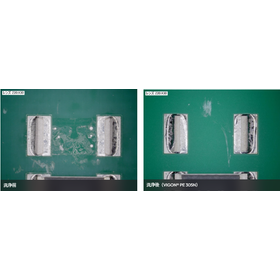
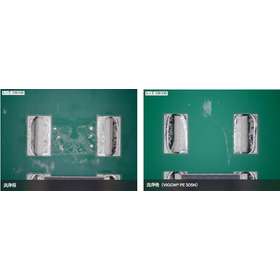
A page for "flux cleaner" has been added.
We have added a page for "Flux Cleaning Agent." This product selectively removes flux residues and is a water-based cleaning agent that supports the quality and reliability of electronic devices. Conventional solvent-based cleaning agents primarily rely on dissolving action to remove flux residues, but this product simultaneously exhibits both peeling and dissolving actions through its unique cleaning technology. 【Features】 ■ High cleaning performance due to unique cleaning technology ■ Removal of oxide films and prevention of re-oxidation during cleaning ■ Increased bonding strength through cleaning ■ High safety due to being a water-based cleaning agent
-
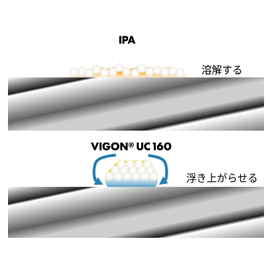
A page for the metal mask back wipe cleaning agent "VIGON UC 160" has been added.
"VIGON UC 160" is a water-based cleaning agent specifically designed for use in printing machines to remove cream solder that adheres to the backside of metal masks. It demonstrates stable cleaning performance due to appropriate wetting spread, contributing to the stabilization of printing conditions and the suppression of various printing defects. Furthermore, it excels in safety and is suitable as a substitute for IPA. We are providing samples to confirm the cleaning ability and usability of this product. Please feel free to contact us.
-
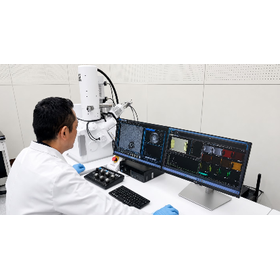
I have added a page titled 'What is SEM-EDS (SEM-EDX) Analysis? From Principles to Examples of Elemental Analysis, Foreign Substance Analysis, and Residue Analysis.'
In the manufacturing environment of electronic devices, quality issues can arise due to foreign substances and residues. SEM-EDS analysis is widely used as an analytical method to help identify the causes of these issues. This article will introduce the basic principles of SEM-EDS, what can be understood from the analysis, and specific case studies of the analysis.

Aboutゼストロンジャパン
【Water-based flux cleaning agent manufacturer】 From cause investigation to cleaning, a flux cleaning agent manufacturer evolving through analytical power.
Zestron is a global standard "flux cleaning agent manufacturer" based in Germany, with eight locations worldwide. Our cleaning agents are primarily environmentally friendly water-based cleaners that achieve a balance between cleaning performance and safety, while also enabling the reduction of organic solvents, VOCs, and overall usage to lower costs. At our technical center in Kanagawa, customers can choose from inline and batch-type spray cleaning equipment, as well as jet and ultrasonic devices, tailored to their needs, allowing them to test work cleaning under conditions equivalent to those in production environments. In parallel with the cleaning tests, we analyze cleanliness at our analysis center. Utilizing digital microscopes, FT-IR, ion chromatography, and SEM-EDX/EDS, we can detect flux residues that are often overlooked by visual inspection. After the tests are completed, our engineers will provide a technical report detailing recommended processes. *We generally offer support for cleaning process issues free of charge. If you have any requests or challenges related to flux cleaning, please feel free to contact us.