
International Image Device Exhibition 2026 Participation | Low Heat Generation CoaXPress Camera


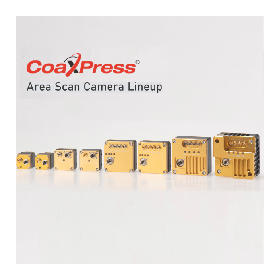
High resolution, high speed, low latency. Stable image acquisition is possible!
Japan Bo-Pixel Corporation will exhibit at the International Imaging Equipment Exhibition 2026. At our booth, we will showcase demo displays featuring cutting-edge sensors and offer consultations for various customizations. We look forward to your visit! 【Main Highlights of the Exhibition】 - 245MP CXP Ultra High-Resolution Camera: 245 million pixels ultra high-resolution camera - 105MP CoF100G High-Resolution High-Speed Camera: Achieving high resolution and high-speed transmission with CoaX-Over-Fiber - 2D & 3D High-Speed Simultaneous Acquisition DoF Camera 【About Japan Bo-Pixel】 Based in Yokohama, we are a Japanese camera manufacturer specializing in low power consumption and low heat generation FPGA design technology using Ultra Low Power FPGA. We offer a range of products including CoaXPress area cameras and line cameras with significantly reduced power consumption and heat generation, CoaXPress-over-Fiber (CoF) cameras, high-resolution TDI line scan cameras, and DLP projectors for 3D shape measurement.
basic information
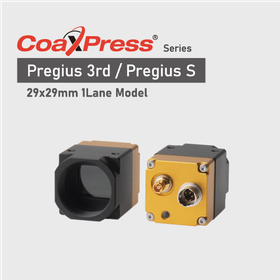
Common Features of CoaXPress (CXP) ➤ Ultra-fast data transfer: Supports up to 12.5Gbps per lane (CXP-12), enabling a maximum bandwidth transmission of 50Gbps with a 4-lane configuration. ➤ Long-distance transmission and thin cables: Utilizes easy-to-handle coaxial cables, allowing for approximately 25m transmission in high-speed bandwidth (CXP-12) and over 100m in low-speed bandwidth (CXP-1). ➤ Wiring reduction with a single cable (PoCXP): Consolidates video output, camera control, trigger signals, and power supply into one coaxial cable, using compact and robust Micro-BNC or DIN connectors. ➤ Low latency and low PC load: Offers low latency and reduces CPU load on the PC by performing reception processing on the grabber board. Unique Features and Advantages of Japan Bopixel Achieves high reliability through design and development by skilled Japanese engineers in Yokohama. By adopting next-generation low-power FPGAs, it significantly reduces power consumption and heat generation while maintaining a compact, fanless chassis that is among the smallest in the industry, along with high heat dissipation and flexible customization options.
Price range
Delivery Time
Applications/Examples of results
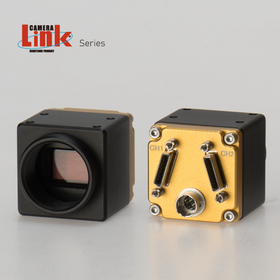
It is suitable for high-speed appearance inspection of semiconductor wafers and electronic components, continuous transport inspection of FPDs, secondary batteries, films, etc., and high-speed 3D shape measurement, where high precision and short takt time are required. In interface transitions, the replacement from CameraLink, which has issues with cable thickness and transmission distance, and from GigE and USB3, which have limitations in bandwidth and latency, is becoming mainstream. By utilizing power supply through a single coaxial cable (PoCXP) for simplified wiring, along with long-distance transmission and a low heat generation, compact fanless design, there are increasing examples of transitions that achieve high-speed and multi-camera inspection lines while minimizing changes to existing equipment enclosures and extensive cooling measures.
Related Videos
catalog(9)
Download All Catalogs



Recommended products







Distributors

We focus on the design, development, manufacturing, and sales of high-speed, high-resolution, and highly reliable machine vision cameras primarily using CoaXPress and CameraLink. In addition to developing standard products, we also offer development and customization tailored to customer requests. All camera design and development is carried out by our Japanese staff, ensuring design and production techniques that guarantee delicate and highly reliable standards in Japan, while integrating the dynamic action and speed of China to provide competitive products. At Japan Bopixel, we have successfully become the first camera manufacturer to utilize Ultra Low Power FPGA instead of the standard FPGA adopted by the majority of camera manufacturers. This Ultra Low Power FPGA reduces power consumption by over 50% compared to similar class FPGAs, significantly lowering power consumption and heat generation in cameras by addressing the heat source at its root. By actively adopting these next-generation key devices, we are taking a new approach to the heat generation issues that have traditionally been a challenge.