
What is hexavalent chromium? Toxicity and standard values [Basic knowledge]

What does hexavalent chromium contain? This will explain the differences in toxicity compared to trivalent chromium, the standard values for water and soil, handling in wastewater, and precautions during work.
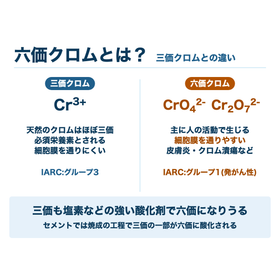
Hexavalent chromium is a general term for compounds containing chromium with an oxidation state of +6. In water, it mainly exists in the form of anions such as chromate ions (CrO4 2-) and dichromate ions (Cr2O7 2-). ■ Natural chromium is mostly trivalent Chromium in nature exists primarily in a trivalent state. Hexavalent chromium is rarely found in nature and is mainly produced by human activities. ■ What contains hexavalent chromium? It is used in metal surface treatments such as chrome plating and chromates, pigments, rust-proof paints, leather tanning, and wood preservatives. It is also found in cement, as some of the trivalent chromium in the raw materials is oxidized to hexavalent chromium during the firing process. ■ What is the difference from trivalent chromium? Trivalent chromium is considered an essential nutrient and is found in various foods. In contrast, hexavalent chromium easily passes through cell membranes, while trivalent chromium does not. The International Agency for Research on Cancer (IARC) classifies hexavalent chromium as Group 1 (carcinogenic to humans) and trivalent chromium as Group 3. Please feel free to consult us first.
basic information
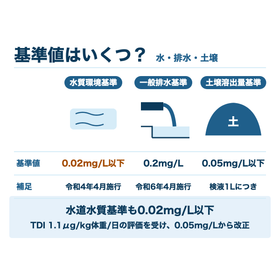
■What kind of toxicity does it have? Chromates and dichromates have strong oxidative properties, causing corrosion of the skin and mucous membranes, leading to dermatitis and chrome ulcers. Inhaling dust or mist can cause inflammation of the nasal mucosa and perforation of the nasal septum, and long-term exposure increases the risk of lung cancer. ■List of standard values 1. Water quality environmental standard: 0.02 mg/L or less (public water bodies, groundwater) 2. Drinking water quality standard: 0.02 mg/L or less 3. General wastewater standard: 0.2 mg/L 4. Soil leaching standard: 0.05 mg or less per 1L of extract 5. Soil content standard: 250 mg or less per 1kg of soil ■Why 0.02 mg/L? The Food Safety Commission evaluated the tolerable daily intake (TDI) of hexavalent chromium at 1.1 μg/kg body weight/day. In response, the drinking water quality standard was revised from 0.05 mg/L, and the environmental standards (enforced in April 2022) and wastewater standards (enforced in April 2024) have also become stricter. ■Can trivalent chromium become hexavalent with chlorine? Trivalent chromium in water can be oxidized to hexavalent chromium by strong oxidizers such as chlorine or hypochlorous acid. Conversely, in oxygen-poor water or water rich in iron (II) and organic matter, it is more likely to be reduced back to trivalent chromium.
Price range
Delivery Time
Applications/Examples of results
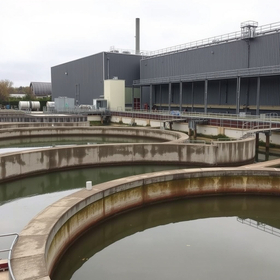
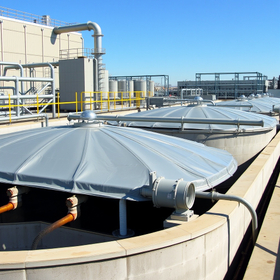
■How is wastewater treated? For the treatment of wastewater containing hexavalent chromium, there are methods such as reducing it to trivalent chromium with chemicals and then precipitating it as hydroxide for removal, or adsorbing it onto an anion exchange resin. Some facilities have added reducing agents to meet the 0.2 mg/L standard. ■Why is the wastewater standard set at 0.2 mg/L? The wastewater standard for hazardous substances is generally set at ten times the environmental standard value. With the environmental standard set at 0.02 mg/L, the wastewater standard has been lowered to 0.2 mg/L. Some municipalities have established stricter additional wastewater standards through ordinances. ■Preventing occupational accidents in treatment tanks When handling chemicals for the treatment of hexavalent chromium wastewater, there is a risk of health issues such as chromium ulcers for workers due to the release of chromic acid mist. To prevent this, the following measures can be taken: 1. Sealing: Minimize the openings for chemical input. 2. Exhaust: Install suction and exhaust equipment on the top cover to maintain negative pressure inside the tank. In factory wastewater management, Torii also assists with inspections of wastewater sites and the selection of appropriate chemicals for each tank. Please feel free to consult with us.
catalog(2)
Download All Catalogs
Recommended products










Distributors

Since our founding, we have continued to provide flexible services with the motto of accurately supplying a diverse range of products that respond to changes in the times and the diversification of consumer needs, tailored to various applications and requirements. With the corporate slogan "Chemical Engineering Partner," we, as a group of experts in chemical technology, actively discover ideas to solve our customers' problems from advanced technologies both domestically and internationally, and propose them.