
What is the water quality test for utility water? Standards for building reclaimed water [Basic Knowledge]
What are the differences between water for sprinkling and water for toilets? This explains the inspection items and frequency for miscellaneous water under the Building Sanitation Law, as well as management to prevent accidental ingestion.
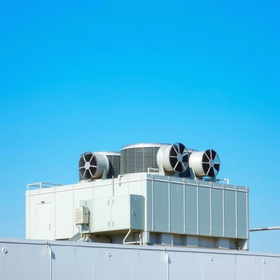
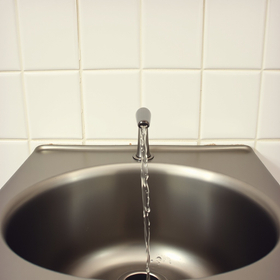
In specific buildings under the Building Sanitation Act (Law concerning the assurance of sanitary environments in buildings), rainwater, well water, and treated wastewater are used for purposes such as irrigation and toilet flushing. The enforcement regulations define water used for purposes other than drinking, cooking, and bathing (excluding bathing in inns) as "general use water." Regulations regarding the quality and management of general use water were added in April 2003. ■ General use water is divided into two categories: 1. For irrigation, landscaping, and cleaning: Water used for irrigating plants, landscaping such as fountains, and cleaning floors. 2. For flushing toilets: Water used for cleaning toilets. ■ Which buildings are subject to this? Specific buildings are those with a total floor area of 3,000 square meters or more, such as offices, stores, department stores, and inns. Schools defined under the School Education Act are subject if they have a total floor area of 8,000 square meters or more. ■ Is it exempt if only tap water is used? This regulation does not apply to general use water that is sourced solely from municipal water supply or dedicated water supply. If rainwater or well water is mixed in any amount, it is advisable to check whether the regulation applies based on the water source. Please feel free to consult with us first.
basic information
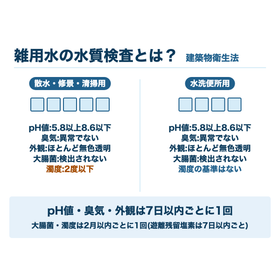
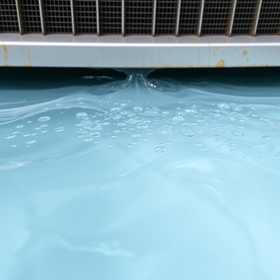
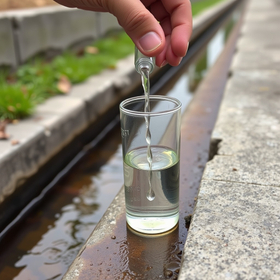
■The standards for irrigation water consist of 5 items. Water for irrigation, landscaping, and cleaning must meet the following standards: 1. pH value: between 5.8 and 8.6 2. Odor: no abnormality 3. Appearance: mostly colorless and transparent 4. Coliform bacteria: not detected 5. Turbidity: 2 degrees or less The turbidity standard of 2 degrees is the same value as the drinking water quality standard. ■How often are inspections conducted? pH value, odor, and appearance are inspected once every 7 days, while coliform bacteria and turbidity are inspected once every 2 months. The inspection of free residual chlorine at the water supply faucet is also conducted once every 7 days. ■Are there no turbidity standards for toilet water? The standards 1 to 4 above apply to water for flushing toilets. There is no turbidity standard required. The only difference in inspection items between irrigation water and toilet water is whether turbidity is included. ■What water cannot be used as raw water for irrigation? Water containing human waste cannot be used as raw water for irrigation, landscaping, or cleaning. Additionally, measures such as inspecting the tanks for miscellaneous water are required to prevent contamination from wastewater.
Price range
Delivery Time
Applications/Examples of results
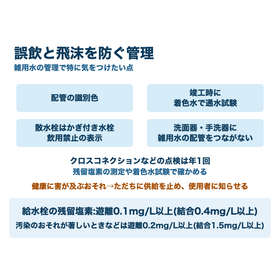
■How long does residual chlorine last? Residual chlorine must be maintained in utility water as well. The minimum concentration to be maintained at the water supply outlet is set at 0.1 mg/L for free residual chlorine and 0.4 mg/L for combined residual chlorine. In cases where there is a significant risk of contamination by pathogens, a level of 0.2 mg/L (or 1.5 mg/L for the same) or higher is required. ■Management to prevent accidental ingestion and splashes Particularly important in the management of utility water is the prevention of accidental ingestion and the prevention of splash dispersion. Measures include the use of identification colors for piping, water flow tests using colored water at the time of completion, and the installation of locked faucets and signs prohibiting drinking. It is also advisable to avoid connecting utility water piping to sinks or handwashing basins. ■How to inspect for pipe contamination? Inspections for cross-connections and other issues should be conducted annually, verifying through residual chlorine measurements and colored water tests. If it is determined that there is a risk to human health, the supply of utility water should be immediately stopped, and users should be informed accordingly. At Torii, we offer consultations regarding sodium hypochlorite used for residual chlorine management and water quality testing. Please feel free to reach out to us for inquiries.
catalog(2)
Download All Catalogs
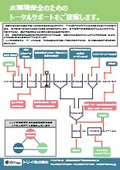
Recommended products
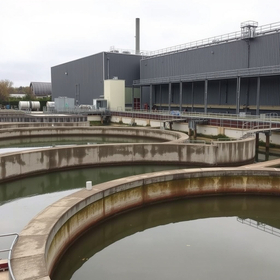
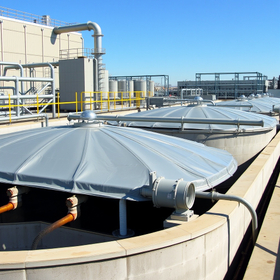
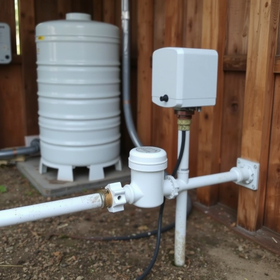
Distributors

Since our founding, we have continued to provide flexible services with the motto of accurately supplying a diverse range of products that respond to changes in the times and the diversification of consumer needs, tailored to various applications and requirements. With the corporate slogan "Chemical Engineering Partner," we, as a group of experts in chemical technology, actively discover ideas to solve our customers' problems from advanced technologies both domestically and internationally, and propose them.