news list
latest news

We have added a page explaining the principles of ultrasonic cleaning, from the mechanism of frequency to equipment selection and operation.
In the manufacturing process of industrial components, foreign substances remaining on the surface of parts or in fine gaps can significantly affect the reliability and yield of the products. Ultraso…
31~34 item / All 34 items
-

We have newly added technical documentation on 'Ion Residues in Electronic Substrates and Their Analytical Methods'.
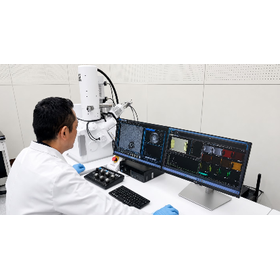
This document explains the analysis of ionic residues on electronic substrates that our company, as a cleaning agent manufacturer, has been working on. It includes explanations about ions and flux, as well as discussions on ion contamination measurement, ion chromatography, and scanning electron microscopy with energy dispersive X-ray spectroscopy. Additionally, it features case studies on the cleaning efficacy of surfactants. Please feel free to download and read it.
-

Our engineers have written 'Ion Residues in Electronic Circuit Boards and Their Analytical Methods.'
In the technical book "Analysis Techniques for Foreign Substances and Sample Pretreatment, Interpretation of Results" published by the Technical Information Association, our engineers have written a section titled "Ion Residues on Electronic Substrates and Their Analytical Methods." It provides detailed descriptions of "What are Ion Residues," "Analysis of Ion Residues Remaining on Electronic Substrates," and "Analytical Case Studies - Cleaning Properties of Surfactants." This book serves as a valuable resource for addressing concerns such as difficulties in library searches or uncertainty about which analytical instruments to use, along with a wealth of analytical case studies.
-

Compliance with Regulations and Safety Measures for Cleaning Agents: A Step-by-Step Explanation of Purchase, Use, and Storage
We have added an article that explains "Compliance with Regulations and Safety Measures for Cleaning Agents" step by step regarding purchasing, using, and storing them. In recent years, from the perspective of environmental conservation and human protection, countries have strengthened regulations concerning the handling of chemical substances, and there is a global trend towards initiatives related to the SDGs (Sustainable Development Goals). In Japan, the Industrial Safety and Health Act will be revised in April 2024, strengthening the handling of chemical substances. To reduce health risks for workers and environmental impacts, some companies are moving to avoid procuring materials that have a significant environmental burden, and cleaning agents are no exception. Taking into account efforts abroad, we will introduce the regulations related to cleaning agents.
-

[Free Giveaway] How to Choose a Flux Cleaning Agent Without Making Mistakes!
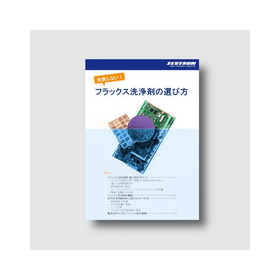
This document explains how to choose flux cleaning agents. It provides specific examples of key points to consider when selecting flux cleaning agents and highlights the aspects to focus on. It also includes important considerations for water-based cleaning agents, such as controlling evaporation loss and variations in water content, as well as examples of non-cleaning type flux cleaning cases. We encourage you to read it. [Contents (partial)] ■ Key points for selecting flux cleaning agents ■ Types of flux cleaning agents ■ Considerations when evaluating water-based cleaning agents ■ Examples of non-cleaning type flux cleaning cases