
What are the analysis methods for PFAS? Points to consider when requesting testing [Basic Knowledge]
The analysis of PFAS is conducted by determining the target to be measured. This explains the mechanism for measuring ng/L and points to be careful about regarding sampling containers and request details.
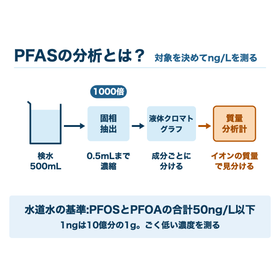
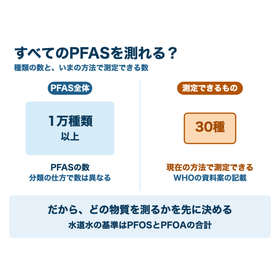
In the analysis of PFAS, we first decide which substances to measure from those contained in water. This is because there is no method to measure all PFAS at once. ■ Can all PFAS be measured? There are over 10,000 types of PFAS, although the number varies depending on how they are classified. On the other hand, according to WHO's draft materials, the PFAS that can currently be measured with existing methods include about 30 types, including PFOS and PFOA. ■ Why is concentration necessary? The standard for drinking water is that the total of PFOS and PFOA must be below 50 ng/L. Since 1 ng is one billionth of a gram, this means measuring very low concentrations. The method indicated for testing drinking water involves concentrating a 500 mL water sample to 0.5 mL through a process called solid-phase extraction, making it 1000 times more concentrated before measurement. ■ Separate and distinguish by mass The concentrated liquid is first separated by components using liquid chromatography, and then measured with a mass spectrometer. The combination of the mass of the original molecule's ions and the ions created by breaking it down allows for the identification and quantification of substances. Because there are many similar substances, separating them beforehand helps prevent mix-ups. Please feel free to consult with us first.
basic information
■Add the marker substance first Before solid-phase extraction, add PFOS or PFOA with some of the carbon replaced by 13C to the water sample to correct the recovery rate during the operation. ■Should branched forms also be counted? PFOS and PFOA have straight-chain linear forms and branched isomers. In tap water testing, the concentration is determined by combining the peak areas of the linear and branched isomers. In the measurement methods for rivers and groundwater, it is also acceptable to quantify branched isomers using the calibration curve of the linear form. ■Substances that produce signals similar to PFOS! Deoxycholic acids found in biological samples and urine produce ions with the same combination as PFOS. Therefore, in samples from downstream wastewater treatment plants, it is necessary to compare the intensity ratio of the two types of ions with that of the standard solution to confirm whether it is truly PFOS. ■Is the measurement method the same for tap water and rivers? The method for testing compared to the standards for tap water has been added to the national notification and will be applied from April 2026. The measurement methods for rivers and groundwater are established separately. Even for the same substance, it is measured using the method appropriate for the purpose.
Price range
Delivery Time
Applications/Examples of results
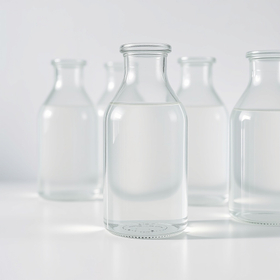
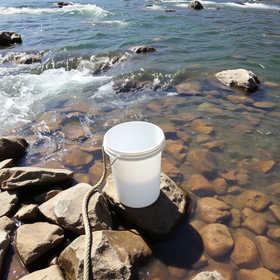
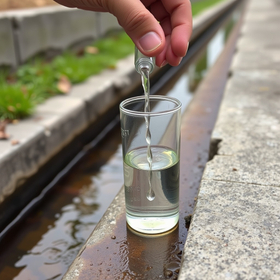
■Is it okay to use a glass water sampling container? PFOS and PFOA are known to easily adsorb to glass and can leach from equipment. Therefore, it is advisable to avoid glass containers as much as possible. Also, avoid buckets with fluoropolymer coatings and thoroughly wash them with methanol before use. ■What should you decide before making a request? 1. Purpose: Are you comparing to drinking water standards or conducting voluntary checks? 2. Target: Are you only testing for PFOS and PFOA, or will you include other PFAS as well? 3. Lower limit: What concentration level is sufficient compared to the standard value? 4. Sampling: Confirm the container and sampling method with the testing organization in advance. ■Where should you request water testing? According to the Water Supply Act, water suppliers must establish testing facilities, but they are not required to do so if they outsource testing to local government agencies or nationally registered organizations. ■Consider the implications of the results After reviewing the test results, you will need to think about necessary measures and subsequent actions. Our company offers consultations on water treatment equipment such as activated carbon and filtration systems. Please feel free to reach out to us first.
catalog(1)
Download All Catalogs
Recommended products

Distributors

Since our founding, we have continued to provide flexible services with the motto of accurately supplying a diverse range of products that respond to changes in the times and the diversification of consumer needs, tailored to various applications and requirements. With the corporate slogan "Chemical Engineering Partner," we, as a group of experts in chemical technology, actively discover ideas to solve our customers' problems from advanced technologies both domestically and internationally, and propose them.