
Case Study (Harika Co., Ltd.)


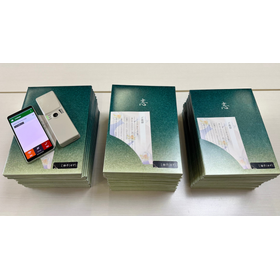
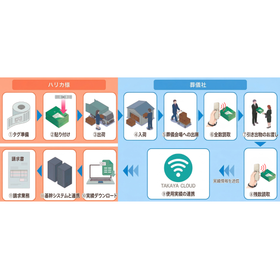
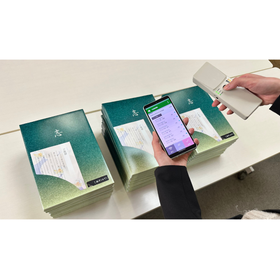
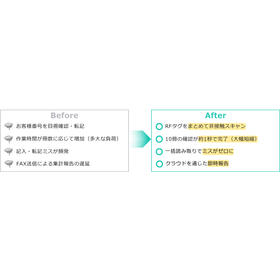
The site reduces the burden on the field by eliminating the need to transcribe "just reading RF tags," making performance verification smoother.
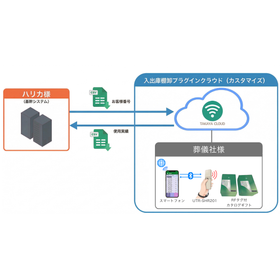
【Systematization from Differential Aggregation to Reporting】 Thanks to the use of RFID, on-site operations have been simplified into the following four steps: 1. RFID Tag Attachment: UHF band RF tags are attached to catalog gifts. 2. Pre-registration of Data: For each funeral, the family name and funeral company name are linked to the catalog ID to be distributed and registered in the system. 3. Pre-distribution Scanning: Before the start of the funeral, the planned distribution is scanned in bulk with an RFID reader to confirm inventory. 4. Post-completion Scanning: The remaining catalogs are scanned again, and the system automatically calculates the differences. The results are then sent to the cloud as actual data. With this simple system that allows operations to be completed by "just reading," handwritten tasks have been eliminated, significantly reducing the burden on on-site staff. Additionally, the risk of rework related to verifying distribution results has been minimized, achieving a highly stable operational framework. *For more details, please refer to the "Case Study of Harika Co., Ltd."
basic information
For more details, please see the case study of Harika Co., Ltd.
Price range
Delivery Time
Applications/Examples of results
For more details, please refer to the case study of Harika Co., Ltd.
catalog(6)
Download All Catalogs


Recommended products



Distributors

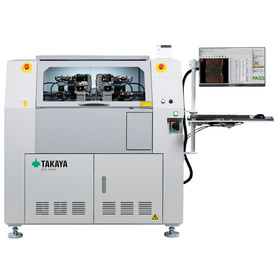
Founded in 1894 as a textile company, Takaya Textile expanded and established its electronics division in 1966, beginning the assembly of transistor radios. Currently, in addition to contract manufacturing services (EMS) related to electronic devices, the company actively manufactures and sells in-circuit testers (printed circuit board inspection devices), RFID-related equipment (technology that enables information exchange through short-range wireless communication from IC information tags), and engages in IT consulting and system solutions, among various electronics businesses both domestically and internationally. We will continue to evolve as a corporate group that contributes to the development of society, with textiles and electronics as our two pillars.