
What is the difference between inorganic coagulants and polymer coagulants? 【Basic Knowledge】
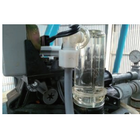

Which one is used to make floc? The difference in roles between inorganic coagulants and polymer coagulants.
■What are inorganic coagulants? Inorganic coagulants are coagulants that do not contain carbon, used to neutralize the surface charge of fine impurities in water and to form flocs (clumps of impurities). They are broadly classified into aluminum-based and iron-based, with polyaluminum chloride (PAC) and ferric chloride being well-known examples. ■What is different about polymer coagulants? Unlike inorganic coagulants, polymer coagulants do not form new flocs; instead, chain-like polymers are added to entangle and bridge the existing flocs, promoting their aggregation. They are also referred to as "coagulation aids" because they support the function of inorganic coagulants. ■Why use a combination of the two types? In wastewater treatment, it is common to first create fine flocs using inorganic coagulants and then to aggregate them using polymer coagulants in a two-step process. The settling velocity of flocs increases proportionally to the square of their particle size, making sedimentation separation easier as they become larger. Please feel free to consult us.
basic information
Please check the details in the materials.
Price range
Delivery Time
Applications/Examples of results
We have experience in selecting coagulants and wastewater treatment consultations. Please feel free to contact us.
catalog(2)
Download All Catalogs

Recommended products





Distributors

Since our founding, we have continued to provide flexible services with the motto of accurately supplying a diverse range of products that respond to changes in the times and the diversification of consumer needs, tailored to various applications and requirements. With the corporate slogan "Chemical Engineering Partner," we, as a group of experts in chemical technology, actively discover ideas to solve our customers' problems from advanced technologies both domestically and internationally, and propose them.