
What is the treatment of fluoride wastewater? Reasons for precipitating with calcium [Basic Knowledge]
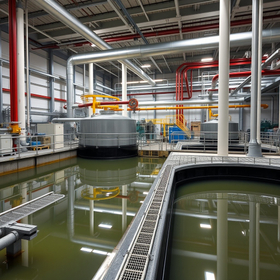
Fluoride wastewater is treated by adding calcium to convert it into calcium fluoride, which is not easily soluble in water, allowing it to settle. I will explain the reasons, the difference between theoretical values and actual results, and the finishing treatment.
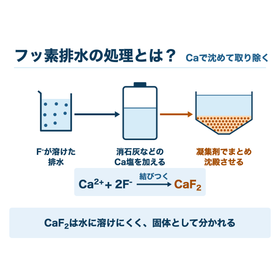
The treatment of fluoride wastewater refers to the process of converting fluoride ions dissolved in wastewater into a solid form and removing them from water. A typical method involves adding calcium salts, such as quicklime, to precipitate the fluoride. The uniform discharge standards for fluoride are set at 8 mg F/L for discharges outside marine areas and 15 mg F/L for discharges into marine areas. Fluoride is included in the category of harmful substances within the discharge standards. ■ From which factories does it come? Wastewater containing fluoride may originate from processes such as metal surface treatment or etching in the manufacturing of semiconductors, where hydrofluoric acid is used. ■ Why calcium? Calcium ions bond with fluoride ions to form calcium fluoride (CaF2). This reaction involves one calcium ion combining with two fluoride ions. Since CaF2 is poorly soluble in water, it separates as a solid. In actual treatment, there are cases where the pH is raised above 10 to facilitate separation. The resulting fine particles are then aggregated into flocs using inorganic or polymeric coagulants before being precipitated. The idea behind this treatment is to intentionally convert dissolved substances into a form that is less soluble for extraction. Please feel free to consult us first.
basic information
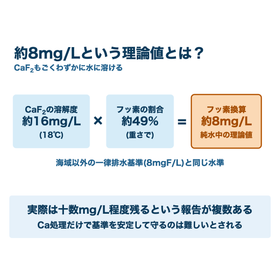
■What is the theoretical value of approximately 8 mg/L that is often heard? CaF2 does dissolve in water, albeit very slightly. Its solubility at 18°C is about 16 mg/L. Since fluorine accounts for about 49% of the weight of CaF2, this translates to approximately 8 mg/L when converted to fluorine. This is the theoretical value when saturated in pure water, which is the same level as uniform discharge standards outside of marine areas. ■In reality, it often remains at around a dozen mg/L In actual wastewater, the coexistence of other ions and fluctuations in concentration hinder the reaction. Therefore, with calcium treatment alone, fluorine tends to remain at around a dozen mg/L. Due to the influence of such coexisting ions, it is difficult to consistently meet the standards with calcium treatment alone. ■There is fluorine that does not precipitate with calcium! Boron tetrafluoride ions (BF4-) can only form salts that remain soluble in water even when bound to calcium, making them impossible to precipitate. Even if the concentration of fluorine is the same in analysis, the results of treatment can vary depending on the proportion of this form. The ease of treatment changes depending on the form in which fluorine is present in the wastewater.
Price range
Delivery Time
Applications/Examples of results
■Use aluminum in the second stage Fluoride remaining from calcium treatment can be further reduced by adding aluminum salts such as sulfuric acid bands or PAC. This method involves incorporating fluoride into aluminum hydroxide and precipitating it, commonly referred to as the two-stage coagulation method. There is also a method that primarily uses aluminum salts known as the aluminum salt method. ■What should you be careful about after treatment? 1. pH: Adding a large amount of quicklime raises the pH, so it should be returned to the standard range (5.8 to 8.6 outside of marine areas) before discharge. 2. Sludge: Using aluminum salts tends to produce sludge with a high moisture content. 3. Recovery: There is also a method to recover CaF2 as a crystal for use as a fluoride raw material. The treatment is constructed not only based on the amount of chemicals but also includes the handling of sludge. ■First, understand the contents of the wastewater! The appropriate treatment varies not only with the concentration of fluoride but also with the substances contained together and the range of concentration fluctuations. When reviewing treatment, it is a shortcut to start with an analysis of the wastewater and checking the discharge of wastewater at each stage. Our company offers consultations on the selection of water treatment chemicals such as coagulants and wastewater treatment facilities. Please feel free to contact us first.
catalog(2)
Download All Catalogs
Recommended products
Distributors

Since our founding, we have continued to provide flexible services with the motto of accurately supplying a diverse range of products that respond to changes in the times and the diversification of consumer needs, tailored to various applications and requirements. With the corporate slogan "Chemical Engineering Partner," we, as a group of experts in chemical technology, actively discover ideas to solve our customers' problems from advanced technologies both domestically and internationally, and propose them.