
PC for optical design using Ansys Zemax OpticStudio


This is a PC that maximizes processing efficiency in various analysis scenarios such as optical design, simulation, optimization, and tolerance analysis!
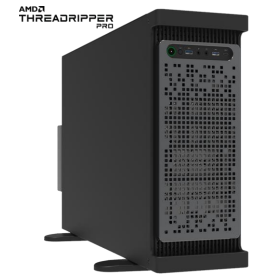
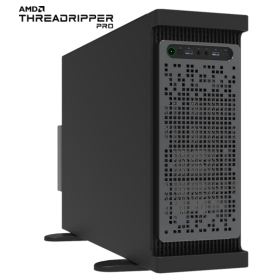
At Applied, we offer high-spec computing specialized for various analyses and simulations. In the optical design software Ansys Zemax OpticStudio, it is possible to use up to 64 CPU cores simultaneously. Therefore, it is advisable to have around 128GB of memory. Here is a recommended model that firmly addresses those points.
basic information
Specifications ■CPU: AMD Ryzen Threadripper 7980X 64 cores / 128 threads / 3.2-5.1GHz ■Memory: 128GB (32GB x 4) DDR5-4800 Registered ECC DIMM ■SSD: 1TB M.2 NVMe-SSD high durability specification ■OS: Windows 11 Pro ■Optical Drive: Not included ■GPU: NVIDIA RTX2000 Ada 16GB-GDDR6 ■Power Supply: 1,200W/100V 80 Plus Platinum certified ■Keyboard and Mouse included: Wired USB connection ■Size: Approximately W 235 x H 495 x D 470mm ■Standard Warranty: 3-year send-back hardware warranty
Price range
P5
Delivery Time
OTHER
Applications/Examples of results
Optical design using Ansys Zemax OpticStudio
catalog(1)
Download All Catalogs
News about this product(2)
-

[Blog] "The Possibilities of Automotive Development Expanding with LS-DYNA × AI" HPC Supporting Next-Generation CAE
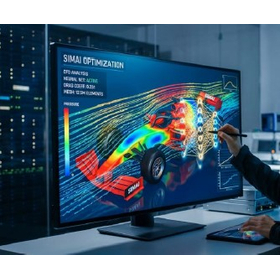
In automotive development, CAE (Computer Aided Engineering) is widely used to enhance safety and performance. Among these, "crash analysis," which predicts the deformation, stress, and strain of the vehicle body during a collision, is crucial in the field of crash safety. The representative CAE software LS-DYNA allows for the setting of conditions such as body shape, materials, thickness, and collision speed to analyze the behavior during a crash. On the other hand, automotive development requires not just a single design proposal but also the comparison of numerous candidates, including materials, thickness, component shapes, and reinforcement positions. This is where the focus shifts to utilizing the analysis data accumulated in LS-DYNA to train AI, which can be used for predicting analysis results and screening design candidates. Rather than replacing CAE, combining CAE with AI has the potential to make the design review process more efficient. Furthermore, HPC (High Performance Computing) becomes essential as a foundation supporting CAE analysis, AI learning, and large-scale data processing.
-

[Blog] <Technical Explanation> The Cutting Edge of CAE Analysis and Optimization Methods for Achieving Carbon Neutrality
Many people may find it hard to grasp the concept of carbon neutrality (reducing environmental impact) in a nutshell. "The goal is to achieve net-zero greenhouse gas emissions overall by 2050." The government announced this goal in October 2020. Those engaged in the research and development sectors of the manufacturing industry are facing various challenges daily in pursuit of this goal. In the field, CAE (Computer Aided Engineering) is currently evolving from a mere "tool for efficiency" to an "essential sustainable strategy." Why is simulation technology the key to saving the planet? This time, I would like to explore the deep relationship between "carbon neutrality and the power of CAE."
Recommended products


Distributors

Applied Corporation is a computer manufacturing company based in Hakata-ku, Fukuoka City, Fukuoka Prefecture, with 65 locations nationwide. We provide the latest business proposals, from cutting-edge computers to the implementation of DX and solutions, for corporate clients across the country.