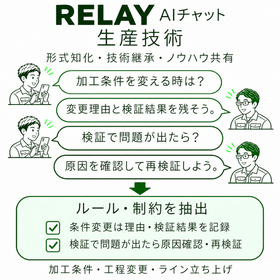
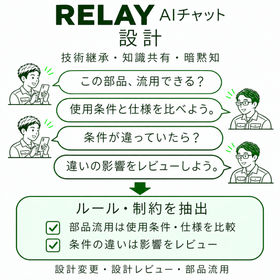
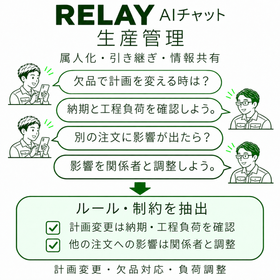
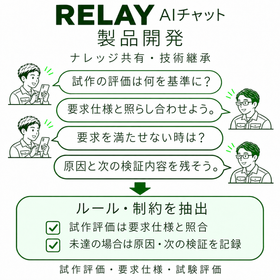
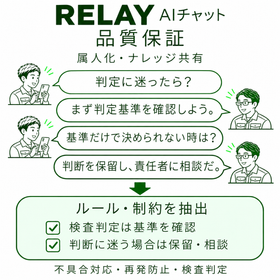
AI RELAY to support measures against the personalization of product development.

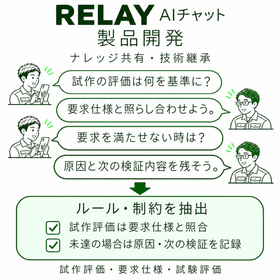
We will share the reason for postponing that proposal within the development team.
The process of deciding whether to adopt or shelve a prototype often relies on specific development personnel, and when that person is unavailable, it can be difficult to verify past decisions. To reassess the personalization of product development, it is essential to document not only the evaluation results but also the criteria that were prioritized in making those selections. RELAY organizes the proposals compared, evaluation criteria, and reasons for adoption or rejection through AI, based on chats between the development and evaluation personnel. This allows team members to review and share the original discussions and the conditions at the time, accumulating knowledge that can be referenced in the next prototype. When successors consider the same proposals, they will also have materials to verify the differences from the previous instance. [Check the usage image in the catalog] Download the related catalog "RELAY Manufacturing Industry Use Case Collection_Design" to see how RELAY can be utilized in the design department. This serves as a reference for other departments when considering its application in product development.
basic information
【Information handled in measures against personalization】 The target is the chat between the personnel who consult each other on the evaluation and adoption of prototype proposals. The AI organizes the evaluation criteria and reasons for judgment, allowing the personnel to verify the original statements and the results at that time. The confirmed knowledge is shared and utilized for measures against personalization in product development and for consideration of the next prototype.
Price range
Delivery Time
Model number/Brand name
RELAY
Applications/Examples of results
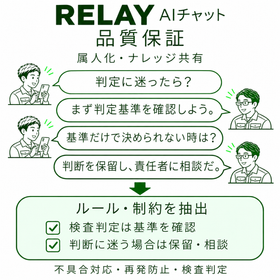
[Utilization Image: Measures Against Personalization] In a prototype, two materials were compared; one met the strength requirements but was set aside due to assembly conditions. The evaluation results and the reason for setting it aside are documented. When the assembly conditions change in the next prototype, another person in charge can verify the previous decision. This allows for a reconsideration of the materials and provides a basis for comparing conditions and making judgments.