AI RELAY that turns processing condition trial history into knowledge.

Even if I search for processing conditions, I don't understand the reason for choosing that value.
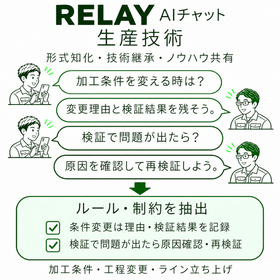
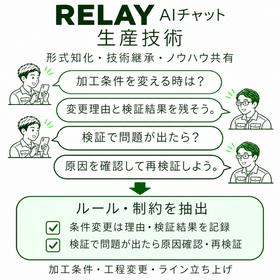
Even if past processing conditions are searched and settings are found, there may be instances where it is unclear which candidates were tried and why a particular one was adopted. By preserving the consultations exchanged during the production technology condition setting, we can cultivate the trial history and the background of decisions into knowledge that can be used for future considerations. RELAY organizes the settings tried, the quality and work conditions confirmed, and the reasons for adoption or rejection through AI, based on the chats exchanged between production technology and manufacturing during the examination of processing conditions. The person in charge can check the original exchanges and the conditions during trials, leaving behind the necessary background when referencing past settings. This will serve as material for examining the differences in condition setting for similar products. [Check the usage image in the catalog] Download the related catalog "RELAY Manufacturing Industry Use Case Collection_Production Technology" to see the usage image of RELAY.
basic information
[Information to be reviewed regarding processing conditions] The target is the chat exchanged between production technology and manufacturing regarding the examination of processing conditions. AI organizes the settings tested, the quality and work conditions confirmed, and the reasons for adoption or rejection. The responsible person verifies the original statements, context, and conditions at the time, accumulating and sharing this knowledge for future consultations and business decisions.
Price range
Delivery Time
Model number/Brand name
RELAY
Applications/Examples of results
【Utilization Image: Review of Processing Conditions】 In a situation where past molding conditions were examined, the settings for temperature and pressure were found, but the conditions that were set aside during prototyping were unclear. Moving forward, we will document the confirmation results and reasons for setting aside conditions during discussions. In the next prototype, we will verify differences in materials and shapes, allowing us to refer to the previous considerations. This is an example of utilizing a record of decision-making along with trial history.