
What is wastewater treatment in food factories? Fats and high-concentration organic matter [Basic Knowledge]
The wastewater from food factories varies significantly in water quality depending on the product. This explains the key points of treatment, including pretreatment for oils and solids, anaerobic treatment for high-concentration wastewater, and issues related to phosphorus deficiency.
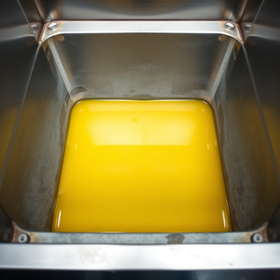
The wastewater from food factories varies in characteristics and quantity depending on the type of product and manufacturing method. A common feature among many food factories is that they have high levels of BOD, SS, and oil content, are prone to decay, and easily produce foul odors due to acid fermentation. The main water quality pollutants include BOD, COD, nitrogen, and phosphorus. In most cases, biological treatment using the action of microorganisms is employed for treatment. ■ What is the BOD level? The range of BOD in wastewater varies by product as follows: 1. Dairy products, etc.: 50–350 mg/L 2. Beer: 500–2000 mg/L 3. Raw bean paste: 500–4000 mg/L 4. Whiskey, shochu, etc.: 600–92000 mg/L Even within the same food factory, there can be significant differences depending on the product. ■ Some factories have varying wastewater depending on the season In factories such as prepared foods and beverages, the products and production volumes may change with the seasons, leading to significant changes in the characteristics and quantity of wastewater. There are also factories, like those producing starch or many sake breweries, that only discharge wastewater for a limited period each year. Please feel free to consult with us first.
basic information
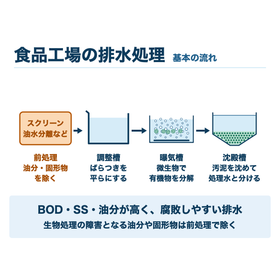
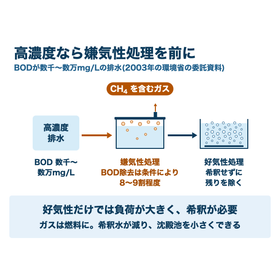
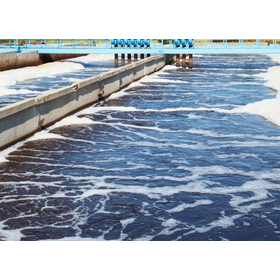
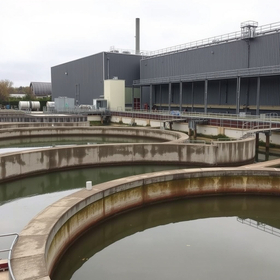
■What is the basic flow? The basic treatment flow for wastewater from food factories consists of a combination of adjustment tanks, aeration tanks, and sedimentation tanks. 1. Adjustment tank: Smooths out variations in water volume and concentration over time. 2. Aeration tank: Breaks down organic matter using microorganisms in activated sludge. 3. Sedimentation tank: Settles activated sludge to separate it from the treated water. ■Remove oil and solids first It is important to remove oil and solids that can hinder biological treatment during the pre-treatment stage. Contaminants such as labels and plastic sheets are often removed using screens, and in wastewater with high oil content, such as that from edible oil production, gravity-based oil-water separation tanks are installed. However, the oil content varies by industry; generally, food factories other than edible oil production have lower oil content, and in cases where it is high, it is often removed together with suspended solids using pressurized flotation devices. ■Is high concentration too much of a load?! When handling wastewater with high concentrations of BOD in the thousands to tens of thousands mg/L using only aerobic treatment, the amount of oxygen required and the load on the equipment increase significantly, necessitating dilution. Therefore, a method is also used where anaerobic treatment is performed for primary treatment, followed by aerobic treatment for secondary treatment without dilution.
Price range
Delivery Time
Applications/Examples of results
■What are the advantages of placing anaerobic treatment first? The main advantages are as follows: 1. It can reduce the load on aerobic treatment. 2. It can convert organic matter into gas containing methane, which can be used as fuel. 3. It reduces the amount of dilution water, allowing for smaller sedimentation ponds. 4. It can suppress the occurrence of bulking. The BOD removal rate of anaerobic treatment is about 80-90% depending on conditions, with the remainder removed by aerobic treatment. ■Is there a shortage of phosphorus?! Biological treatment also requires nitrogen and phosphorus, with a ratio of BOD:N:P=100:5:1. Food factory wastewater often has a low phosphorus ratio, and it is common to supplement it with phosphoric acid or ammonium phosphate. ■Does pH return in the aeration tank? The effective pH for biological treatment of food factory wastewater is generally around 5-9 (preferably around 7), and it needs to be maintained within this range. While organic acids from decay can lower the pH, these organic acids are oxidized in the aeration tank, and the aeration liquid is kept slightly alkaline, so there is not much need for pH adjustment. ■Review of wastewater treatment Our company has examples of improving water quality through a review of wastewater treatment. Please feel free to consult with us.
catalog(2)
Download All Catalogs
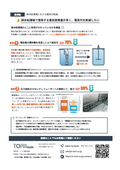
Recommended products

Distributors

Since our founding, we have continued to provide flexible services with the motto of accurately supplying a diverse range of products that respond to changes in the times and the diversification of consumer needs, tailored to various applications and requirements. With the corporate slogan "Chemical Engineering Partner," we, as a group of experts in chemical technology, actively discover ideas to solve our customers' problems from advanced technologies both domestically and internationally, and propose them.