
news list
latest news
Vacuum deposition device □■□【MiniLab-LT080A】□■□ Capable of various deposition applications such as resistance heating, organic deposition, and electron beam deposition.
The ML-080, with a volume of 80 liters and dimensions of 400(W)x400(D)x570(H)mm, is composed of a D-type box chamber. It has the same configuration as the 070 model but features a taller chamber, resu…
31~60 item / All 60 items
-

【MiniLab-125】 Multi-target sputtering system (compatible with Φ8") equipped with a 1000℃ heater stage (SiC coating)! Compact size!
Multifunctional Multi-Sputtering Device (Compatible with Φ8inch Substrates) - Triple-source simultaneous deposition + Single-source Pulse DC sputtering - Flexible arrangement of RF500W and DC850W power supplies to the three-source cathodes (Source 1, 2, 3) - Equipped with a 5KW Pulse DC power supply → Used with dedicated cathode (4) - Substrate heating stage Max 800℃ (SiC-coated heater can achieve Max 1000℃) - MFC x 3 systems (Ar, O2, N2) for reactive sputtering - Main chamber RIE etching stage RF300W - LL chamber <30W low-power controlled soft etching - Unique "Soft-Etching" technology reduces substrate damage through substrate bias - Touch panel or Windows PC operation: All operations can be performed via touch panel/PC without dispersing control. - Equipment installation dimensions: 1,960(W) x 1,100(D) x 1,700(H) mm - Multi-chamber configurations are also possible. ● Mixed specifications for resistance heating deposition, organic material deposition, EB deposition, PECVD, etc., can also be configured.
-

★【MiniLab-060】Flexible Thin Film Experimental Device★ Thermosera Japan
Compact/Space-saving, High-spec 60ℓ volume multi-thin film experimental device that can accommodate various applications by integrating thin film modules such as evaporation, sputtering, EB, and annealing. Compact/Space-saving, High-spec thin film experimental device. Combinations possible from the following evaporation sources: - Resistance heating evaporation source x up to 4 - Organic evaporation source x up to 4 - Electron beam evaporation - 2-inch magnetron sputtering cathode x 4 - Plasma etching: can be installed in either the main chamber or the load lock chamber 【Small Footprint/Space-saving】 - Dual rack type (MiniLab-060): 1200(W) x 590(D)mm 【Excellent Operability/Intuitive Operation Screen】 Windows PC or 7” touch panel. Easy operation regardless of skill level, with maximum safety considerations.
-

★【MiniLab-060】Flexible Thin Film Experimental Device★ Thermosera Japan
Compact/Space-saving, High-spec 60L volume multi-thin film experimental device capable of incorporating various thin film modules such as deposition, sputtering, EB, and annealing, suitable for a wide range of applications. Compact/Space-saving, High-spec thin film experimental device. Combinations possible from the following deposition sources: - Resistance heating deposition source x up to 4 - Organic deposition source x up to 4 - Electron beam deposition - 2-inch magnetron sputtering cathode x 4 - Plasma etching: can be installed in either the main chamber or the load lock chamber. 【Small Footprint/Space-saving】 - Dual rack type (MiniLab-060): 1200(W) x 590(D)mm 【Excellent Operability/Intuitive Operation Screen】 Windows PC or 7” touch panel. Easy operation regardless of skill level, with maximum safety considerations.
-

★☆★☆【MiniLab-026】Flexible Thin Film Experimental Device for R&D★☆★☆
This is a flexible thin-film experimental device for R&D that achieves minimal waste, compact size, simple operation, and high cost performance by integrating the necessary minimum modules and controllers into a 19" compact rack with a Plug&Play feel. It supports magnetron sputtering (up to 3 sources) or resistance heating evaporation (metal sources up to 2, organic materials x4), and can be equipped with a substrate heating stage, allowing for the production of annealing devices and RF etching. A glove box storage type is also available (specifications to be discussed). We offer a wide range of optional components that can be flexibly customized. ◉ Φ2 inch magnetron cathode (up to 3 sources) ◉ Resistance heating evaporation source filament, crucible, boat type (up to 4 poles with automatic switching via controller) ◉ Organic evaporation cell: 1cc or 5cc ◉ Can be equipped with a glove box (optional, specifications to be discussed) ◉ Other options: Simultaneous film deposition, HiPIMS, automatic film deposition controller, custom substrate holders, load lock, substrate rotation/heating/cooling, and many other options available. *Please first contact us with your required specifications, and we will configure the system according to your needs.
-
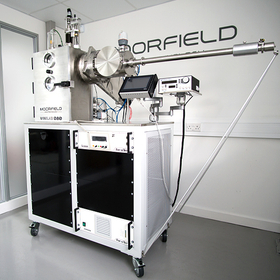
□■□【MiniLab-080】Flexible Thin Film Experimental Device□■□ Can be configured flexibly according to requirements for processes such as deposition, sputtering, EB deposition, and organic deposition.
The ML-080, with a volume of 80 liters and dimensions of 400(W)x400(D)x570(H)mm, is composed of a D-type box chamber. It has the same configuration as the 070 model but features a taller chamber, which extends the TS distance adjustment range and improves film uniformity during deposition on large-diameter substrates, making it an optimal model for vacuum deposition. It is a higher-end model than the ML-070, which can also add a load lock mechanism. Like the 070, it is compact yet supports a wide range of applications including resistance heating deposition (for metals, insulators, and organic materials), EB deposition, RF/DC/PulseDC compatible magnetron sputtering, RIE plasma etching, and annealing. - Maximum substrate size: Φ11 inch - Resistance heating deposition sources x up to 4 units - Organic deposition sources x up to 4 units - Magnetron sputtering cathodes x 4 units - Electron beam deposition - Substrate heating stage (standard 500℃, Max 1000℃) - *Plasma etching / <30W soft etching *Plasma etching can be installed in both the main chamber and the load lock chamber.
-

★☆★☆ MiniLab Series Flexible Thin Film Experimental Device ★☆★☆
The MiniLab thin film experimental device allows for the construction of a compact, semi-customized system that eliminates waste by incorporating the optimal components and control modules based on the required film formation methods and materials from a wide range of options. By equipping a modular control unit with a Plug&Play feel, the application range expands, enabling various thin film process experiments. 【MiniLab Thin Film Experimental Device Configuration Modules】 ◎ Manufacturing Range Resistive heating evaporation (TE), organic evaporation (LTE), electron beam evaporation (EB), sputtering (SP), CVD, dry etching 【Small Footprint & Space-Saving】 - Single rack type (026): 590(W) x 590(D) mm - Dual rack type (060): 1200(W) x 590(D) mm - Triple rack type (125): 1770(W) x 755(D) mm 【Excellent Operability & Intuitive Operation Screen】 Windows PC or 7” touch panel. Easy operation that does not require expertise, with maximum consideration for safety. All operations except for internal component adjustments and material exchanges are performed via the PC/HMI screen.
-

Multi-functional Sputtering System 【MiniLab-S060】
4 cathodes with Φ2 inch mounted Simultaneous film formation: 3-component simultaneous film formation (RF 500W or DC 850W) + HiPIMS (PulseDC 5KW) x 1 Power distribution and configuration settings for 4 cathodes can be freely changed from the HMI screen using the plasma relay switch 3 MFC systems (Ar, O2, N2) for reactive sputtering RIE etching stage RF 300W (main chamber) + <30W soft etching (LL chamber) Substrate heating: Max 500℃, 800℃, or 1000℃ (C/C or SiC coat) Substrate rotation and vertical movement (automatically controlled by stepping motor) APC automatic control: Upstream (MFC flow adjustment) or downstream (automatic valve opening adjustment on the exhaust side) Dimensions: 1,120(W) x 800(D) ● Mixed specifications for resistance heating deposition, organic material deposition, EB deposition, PECVD, etc. are also possible.
-

【MiniLab】 Evaporation/Sputtering Dual Chamber System
Two thin film experimental devices are connected by a load lock mechanism. Different film deposition devices (sputtering - evaporation, etc.) are seamlessly connected via the load lock. With Moorfield's unique load lock system, connections to the process chamber on the left, right, and rear are also possible (see photo below). 1. MiniLab-E080A (Evaporation Device) - EB evaporation: 7cc crucible x 6 - Resistance heating evaporation x 2 - Organic evaporation limit x 2 2. MiniLab-S060A (Sputtering Device) - Φ2" Magnetron cathode x 4 for simultaneous sputtering - Compatible with both DC and RF power supplies 3. Load Lock Chamber - Plasma etching stage In the load lock chamber, plasma cleaning of the substrate surface is performed using the "RF/DC substrate bias stage," and the company's unique "soft etching" technology allows for a <30W low-power, damage-free plasma etching stage. This enables delicate etching processes that are prone to damage, such as 2D (removal of resists like PMMA), graphene delamination, and etching of Teflon substrates. (*This can also be installed in the main chamber stage.)
-
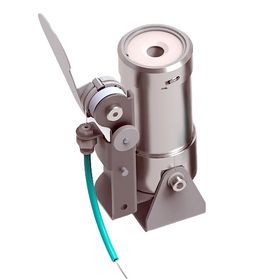
◆OLED◆ Organic vapor deposition - High-temperature metal evaporation source Max 1500℃
The OLED evaporation source is a high-temperature heating heater for vacuum devices with a maximum operating temperature of 1500°C. It can evaporate materials with high evaporation temperatures, making it suitable for a wide range of applications as a vacuum high-temperature heater and evaporation cell, from low-temperature organic deposition (up to 800°C) cells to high-temperature resistance heating deposition (up to 1500°C) MBE cells. Shutter actuators and water-cooled jackets are also available. High-temperature heaters above 800°C are designed with internal shielding, considering insulation and thermal shielding. 【Main Specifications】 ■ Maximum control temperature: 800°C or 1500°C ■ Operating environment: in vacuum or inert gas (*O2 up to 800°C) ■ Heater: tungsten filament ■ Crucible volume: 1cc (maximum fill volume 1.5cc) ■ Crucible material: alumina ■ Case material: SUS304 or molybdenum ■ Thermocouple: K or C 【Options】 ⚫ Crucible material: PBN, graphite, quartz ⚫ Heater: NiCr wire, Kanthal wire (*for O2) ⚫ Crucible volume: 10cc (maximum fill volume 15cc) ⚫ Shutter: pneumatic or motor-driven ⚫ Water-cooled jacket ⚫ Controller (for heater and shutter control)
-

BH Series [UHV Compatible Ultra-High Temperature Vacuum Thin Film Experiment Substrate Heater] Max 1800℃
High vacuum compatible with a variety of heater material options. Can be applied to PVD (sputtering, deposition, EB, etc.), high-temperature vacuum annealing, high-temperature analysis substrate stages, and more. Custom-made to meet various specifications upon request. 【Features】 ● Easy replacement of the pre-heater wire ● Easy installation and maintenance (M6 stud bolts, supports) 【Compatible Substrate Sizes】 ◉ Φ1 inch to Φ6 inch 【Standard Accessories】 ● Thermocouple: wire type with alumina insulation sleeve ● Mounting stud bolts 【Options】 ● Non-standard heater wires (Nb, Mo, Pt/Re, WRe, etc.) ● Substrate holding clips ● Mounting brackets ● Substrate holders ● Tapped hole processing for holder installation ● Change of top plate material (PBN, quartz, carbon, Inconel, etc.) ● Additional thermocouples for overheating ● Base flange, vacuum introduction terminal
-

☆★☆ 【TCF-C500 Ultra High Temperature Small Experimental Furnace】Max 2900℃ ☆★☆
Compact, space-saving, and energy-efficient! High-performance ultra-high-temperature experimental furnace for R&D. A compact experimental furnace capable of heating small samples up to 2900°C for R&D purposes. It can be used for various sintering experiments, including ultra-high-temperature heating experiments and new material development in the laboratory. ◆ Main Features ◆ - Space-saving - Includes rotary pump and compressor - Interlock: water cut-off alarm, overheating, gas pressure drop ◆ Basic Specifications ◆ - Power supply specifications: AC200V 75A NFB 50/60HZ (C-500) - Max 2900°C (carbon furnace), 2400°C (metal furnace) - Programmable temperature controller, C thermocouple ◆ Options ◆ - Recorder - Turbo molecular pump - Crucible ◆ Main Applications ◆ - New material development - Fuel cells - Others
-

★☆★☆【MiniLab-026】Small Thin Film Experimental Device for R&D Development★☆★☆
This is a flexible thin film experimental device for R&D that eliminates waste by integrating the necessary minimum modules and controllers into a 19" compact rack with a Plug & Play feel, achieving compact size, space-saving design, simple operation, and high cost performance. It supports magnetron sputtering (up to 3 sources) or resistance heating evaporation (metal sources up to 2, organic materials x4), and can also be equipped with a substrate heating stage, allowing for the production of annealing devices and RF etching. There is also a glove box storage type available (specifications to be discussed). We offer a wide range of optional components that can be flexibly customized. ◉ Φ2 inch magnetron cathode (up to 3 sources) ◉ Resistance heating evaporation source filament, crucible, boat type (up to 4 poles with automatic switching via controller) ◉ Organic evaporation cell: 1cc or 5cc ◉ Glove box compatible (optional, specifications to be discussed) ◉ Other options: simultaneous film deposition, HiPIMS, automatic film deposition controller, custom substrate holders, load lock, substrate rotation/heating/cooling, and many more options available. *Please first contact us with your required specifications, and we will configure the system to meet your needs.
-

◆nanoPVD-T15A◆ High-performance organic and metal film deposition device
Ideal for organic thin film deposition applications such as OLED, OPV, and OTFT. Utilizes low-temperature organic deposition sources with excellent temperature responsiveness/stability and high-temperature deposition sources for metal films. A fully automated R&D vacuum deposition system with easy touch panel operation, excellent operability, and maintainability. An intuitive HMI that allows anyone to operate without complicated procedures. Connects to a PC via USB cable for log saving and creating and storing automatic deposition recipes. ◉ Compact size: 804(W) x 530(D) x 600(H)mm ◉ Weight: 40kg to 70kg (depending on equipment configuration) ◉ Excellent basic performance - Achievable vacuum level: 5x10⁻⁵ Pascal - Equipped with a high-performance turbo molecular pump - Φ2 inch or Φ4 inch substrates ◉ Deposition sources - Resistance heating deposition source TE x up to 2 units - Organic deposition source LTE x up to 4 units (if mixed with resistance heating TE, up to 2 units) ◉ 7" touch panel ◉ Continuous deposition - Automatic control of deposition programs - 30 types of registered recipes - High-precision wide-range vacuum gauge ◉ Abundant options - Substrate rotation - Up and down lift with 300mm stroke - Substrate shutter - Dry pump (RP standard)
-

★☆★☆【MiniLab-026/090】Glove Box Thin Film Experiment Device★☆★☆
Compact and space-saving! Ideal for organic thin film development, all processes such as deposition, sputtering, and annealing can be seamlessly performed within a glove box. In the development processes of organic EL, organic thin film solar cells, and graphene/2D materials (two-dimensional layered inorganic nanomaterials such as transition metal dichalcogenides), it is necessary to handle samples in an inert gas atmosphere isolated from oxygen and moisture. By housing the PVD chamber within the glove box, a compact and space-saving "oxygen and moisture-free" experimental environment for organic film applications is achieved. 【Features】 ◉ A series of processes such as PVD film deposition, spin coating, and hot plate baking can be performed seamlessly within the glove box without exposing them to the outside air. ◉ Space-saving: The chamber does not protrude from the back, so it does not take up space. 【MiniLab Models】 ◉ MiniLab-026 (26ℓ volume): Metal/insulator/organic material deposition, sputtering, RF/DC etching, annealing ◉ MiniLab-090 (90ℓ volume): Metal/insulator/organic material deposition, sputtering, RF/DC etching, annealing
-

4-Yen Multi-Sputtering Device 【MiniLab-S060】
4 cathodes with Φ2 inch configuration Simultaneous film deposition: 3-component simultaneous deposition (RF 500W or DC 850W) + HiPIMS (PulseDC 5KW) x 1 Power distribution and configuration settings for 4 cathodes can be freely changed via the HMI screen using the plasma relay switch 3 MFC systems (Ar, O2, N2) for reactive sputtering RIE etching stage RF 300W (main chamber) + <30W soft etching (LL chamber) Substrate heating: Max 500℃, 800℃, or 1000℃ (C/C or SiC coating) Substrate rotation and vertical movement (automatically controlled by stepping motor) APC automatic control: Upstream (MFC flow adjustment) or downstream (automatic valve opening adjustment on the exhaust side) Dimensions: 1,120(W) x 800(D) ● Mixed specifications for resistance heating deposition, organic material deposition, EB deposition, PECVD, etc. are also possible.
-

Multi-Target Sputtering Device [MiniLab-125] Compatible with Φ8" SiC Coating Equipped with 1000℃ Heater Stage! Compact Size!
Multifunctional Multi-Sputtering Device (Compatible with Φ8inch Substrates) - Simultaneous deposition of three components + one component Pulse DC sputtering - Flexible arrangement of RF500W and DC850W power supplies to three cathodes (Source 1, 2, 3) - Equipped with a 5KW Pulse DC power supply → used with dedicated cathode (4) - Substrate heating stage Max 800℃ (SiC coated heater can achieve Max 1000℃) - MFC x 3 systems (Ar, O2, N2) for reactive sputtering - Main chamber RIE etching stage RF300W - LL chamber <30W low power controlled soft etching - Unique "Soft-Etching" technology reduces substrate damage through substrate bias - Touch panel or Windows PC operation: All operations can be performed on the touch panel/PC without dispersing control. - Equipment installation dimensions: 1,960(W) x 1,100(D) x 1,700(H) mm - Multi-chamber type can also be manufactured. ● Mixed specifications for resistance heating deposition, organic material deposition, EB deposition, PECVD, etc. are also possible.
-

Sputtering/Dual Chamber System【MiniLab-E080A/S060A】
Two thin-film experimental devices are connected via a load lock mechanism. Different film deposition devices (sputtering - evaporation, etc.) are seamlessly connected through the load lock. With Moorfield's unique load lock system, connections to the left, right, and rear process chambers are also possible (see photo below). 1. MiniLab-E080A (Evaporation Device) - EB Evaporation: 7cc crucible x 6 - Resistance Heating Evaporation x 2 - Organic Evaporation Limit x 2 2. MiniLab-S060A (Sputtering Device) - Φ2" Magnetron Cathode x 4 sources for simultaneous sputtering - Compatible with both DC and RF power supplies 3. Load Lock Chamber - Plasma Etching Stage In the load lock chamber, plasma cleaning of the substrate surface is performed using the "RF/DC substrate bias stage," and the company's unique 'soft etching' technology allows for a <30W low-power, damage-free plasma etching stage. This enables delicate etching processes that are prone to damage, such as 2D (removal of resists like PMMA), graphene delamination, and etching of Teflon substrates. (*This can also be installed in the main chamber stage.)
-

☆★☆ Spatter and Vapor Deposition Source Combined Film Formation Device 【nanoPVD-ST15A】 ☆★☆
Sputter Cathode and Co-evaporation Source Mixed Thin Film Experimental Device. Metal deposition, organic deposition, and sputter cathode are installed in a compact frame. A resistance heating evaporation source (for metal deposition), an organic evaporation source (for organic materials), and magnetron sputtering (for metals and insulating materials) are installed in the chamber, allowing for various thin film experimental setups within a single chamber. ◉ Three combinations available: 1. Sputter Cathode + Resistance Heating Evaporation Source x2 2. Sputter Cathode + Organic Evaporation Source x2 3. Sputter Cathode + Resistance Heating Source x1 + Organic Evaporation Source x1 (*DC sputtering only) 【Specifications】 ◉ Compatible substrates: up to Φ4 inches ◉ Sputtering: 2" cathode x up to 3 sources ◉ Vacuum deposition: Resistance heating evaporation (up to 2), organic evaporation (up to 4) ◉ 7" touch panel operation with PLC automatic process control ◉ APC automatic pressure control ◉ 1 line of Ar gas (standard) + expandable with N2, O2 ◉ Connects to a Windows PC via USB for recipe creation and storage. Data logging on PC ◉ Various other options available ◉ Easy operation with a 7" touch panel and PLC automatic process control
-

MiniLab-WCF Ultra High Temperature Wafer Annealing Furnace Max 2000℃_Dedicated for High-Temperature Wafer Sintering (6inch to 8inch)
Max 2000℃ Φ6〜8 inch wafer dedicated high-temperature annealing device, capable of small-scale production multi-atmosphere wafer annealing device. ◾️ Max 2000℃ ◾️ Effective heating range: Φ6〜Φ8 inch single wafer type or batch type (multi-stage 5 wafer cassette) ◾️ Heater control: 1 zone or 2 zones (cascade control) ◾️ Heater materials: ・C/C composite: Φ6〜Φ8 inch ・PG coating high-purity graphite: Φ6〜Φ8 inch ◾️ Operating atmosphere: ・Vacuum (1x10⁻²Pa), inert gas (Ar, N2) ◾️ PLC semi-automatic operation ・Automatic sequence control for vacuum/purge cycle and venting ・Fully automatic operation (optional) ・Touch panel operation, allowing centralized management without dispersed operations. ◾️ Process pressure control ・APC control (MFC flow or automatic opening adjustment valve PID loop control) ・Maximum 3 systems of MFC flow automatic control, or manual adjustment of float meter/needle valve ◾️ PLOT screen graph display, CSV data output
-

High-Temperature Annealing Furnace ◉ Mini-BENCH-prism Semi-Automatic Ultra-High Temperature Experimental Furnace Max 2000℃
◉ Maximum operating temperature Max 2000℃ ◉ PLC semi-auto control A higher model of the tabletop Mini-BENCH with semi-auto control Automatically controls each process of "vacuum/purge cycle," "gas replacement," and "venting" Maximum operating temperature 2000℃ Semi-auto control ultra-high temperature experimental furnace (carbon furnace, tungsten metal furnace) Compact and space-saving experimental furnace ◉ Effective heating range (crucible dimensions) - Flat heater heating range: Φ2 inch to Φ6 inch - Cylindrical heater heating range: Φ30 to Φ80 x Depth Max 100(H) mm ◉ Up to 3 MFC systems for automatic flow control (or manual adjustment) ◉ APC automatic pressure control ◉ Ensures safety during operation Monitors abnormal cooling water, chamber temperature, and overpressure. Made of SUS, robust water-cooled chamber can be safely used even during continuous operation at maximum temperature. ◉ Compact and space-saving Width 603 x Depth 603 x Height 1,160 mm (*Installed inside rotary pump housing) Ultra-high temperature heating experiments for small samples in the laboratory, as well as various sample heating experiments for new material research and development, can be easily conducted with simple operations. The main unit is compact yet can be used for research and development in various fields.
-

Wafer Annealing Furnace [MiniLab-WCF] Max 2000℃_Specialized for Ultra-High Temperature Wafer Annealing (4 inch to 8 inch)
High-Temperature Annealing Equipment for Max 2000℃ Φ6 to 8 inch Wafers, Capable of Small-Scale Production with Multi-Atmosphere Wafer Annealing System ◾️ Max 2000℃ ◾️ Effective Heating Range: Φ6 to Φ8 inch single wafer type or batch type (multi-layer 5 wafer cassette) ◾️ Heater Control: 1 zone or 2 zones (cascade control) ◾️ Heater Material: ・C/C Composite: Φ6 to Φ8 inch ・PG Coating High Purity Graphite: Φ6 to Φ8 inch ◾️ Operating Atmosphere: ・Vacuum (1x10⁻²Pa), Inert Gas (Ar, N2) ◾️ PLC Semi-Automatic Operation ・Automatic sequence control for vacuum/purge cycle and venting ・Full automatic operation (optional) ・Touch panel operation allows centralized management without dispersed control. ◾️ Process Pressure Control ・APC Control (MFC flow or automatic opening adjustment valve PID loop control) ・Maximum 3 systems of MFC flow automatic control or manual adjustment with flow meter/needle valve ◾️ PLOT screen graph display, CSV data output
-
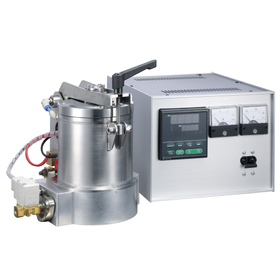
□■□■【Mini-BENCH】Ultra High Temperature Tabletop Experimental Furnace Max 2000℃ □■□■
Tabletop Small-Size Experimental Furnace - Space-Saving, Maximum Operating Temperature 2000℃ ◆ Equipment Configuration ◆ We will propose the desired configuration according to your budget and purpose. (A) Minimum Configuration: Chamber + Temperature Control Unit (B) Above Minimum Configuration (A) + Vacuum Exhaust System (Pump, Gauge, Valve, Vacuum Piping) ◉ Cylindrical Heater: For sintering samples in crucibles (for solid, powder, granule, and pellet-shaped samples) ◉ Flat Heater: For sintering Φ1" to Φ6" wafers and small chip samples ◆ Basic Specifications ◆ - Heater: C/C Composite (Carbon Furnace), Tungsten (Metal Furnace) - Insulation Material: Graphite Felt, Tungsten/Molybdenum - Temperature Control: Programmable Temperature Controller, C Thermocouple - Achievable Vacuum Level: 1x10⁻² Pascal (*for an empty furnace) - Power Supply Specifications: AC200V 50/60HZ Three-Phase 6KVA - Cooling Water: 3L/min, 0.4Mpa 25-30℃ ◆ Control Box Specifications ◆ - Programmable Temperature Controller - DC Power Supply Unit or External Transformer Box - Current and Voltage Meters - Heater Circuit Trip Switch - Main Power Switch ◆ Options ◆ - Vacuum Exhaust System - Custom Crucibles and Others
-

◉Mini-BENCH-prism Semi-Automatic Ultra-High Temperature Experimental Furnace Max 2000℃
◉ Maximum operating temperature Max 2000℃ ◉ PLC semi-automatic control A higher model of the tabletop Mini-BENCH with semi-automatic control Automatically controls each process of "vacuum/purge cycle," "gas replacement," and "venting" Maximum operating temperature 2000℃ Semi-automatic control ultra-high temperature experimental furnace (carbon furnace, tungsten metal furnace) Compact and space-saving experimental furnace ◉ Effective heating range (crucible dimensions) - Planar heater heating range: Φ2 inch to Φ6 inch - Cylindrical heater heating range: Φ30 to Φ80 x Depth Max 100(H) mm ◉ Up to 3 MFC systems for automatic flow control (or manual adjustment) ◉ APC automatic pressure control ◉ Ensures safety during operation Monitors abnormal cooling water, chamber temperature, and overpressure. Made of SUS, the robust water-cooled chamber can be safely used even during continuous operation at maximum temperature. ◉ Compact and space-saving Width 603 x Depth 603 x Height 1,160 mm (*Installed inside rotary pump housing) Various sample heating experiments, such as ultra-high temperature heating of small samples and new material research and development, can be easily performed with simple operations. The main unit is compact yet can be used for research and development in various fields.
-

□■□■【Mini-BENCH】Ultra High Temperature Tabletop Experimental Furnace Max 2000℃ □■□■
Tabletop Small-Size Experimental Furnace - Space-Saving, Maximum Operating Temperature 2000℃ ◆ Equipment Configuration ◆ We will propose the desired configuration according to your budget and purpose. (A) Minimum Configuration: Chamber + Temperature Control Unit (B) Above Minimum Configuration (A) + Vacuum Exhaust System (Pump, Gauge, Valve, Vacuum Piping) ◉ Cylindrical Heater: For sample sintering inside the crucible (for solid, powder, granular, and pellet-shaped samples) ◉ Flat Heater: For sintering Φ1" to Φ6" wafers and small chip samples ◆ Basic Specifications ◆ - Heater: C/C Composite (Carbon Furnace), Tungsten (Metal Furnace) - Insulation Material: Graphite Felt, Tungsten/Molybdenum - Temperature Control: Programmable Temperature Controller, C Thermocouple - Achievable Vacuum Level: 1x10⁻² Pascal (*for empty furnace) - Power Supply Specifications: AC200V 50/60HZ Three-Phase 6KVA - Cooling Water: 3L/min, 0.4Mpa 25-30℃ ◆ Control Box Specifications ◆ - Programmable Temperature Controller - DC Power Supply Unit or External Transformer Box - Current and Voltage Meters - Heater Circuit Trip Switch - Main Power Switch ◆ Options ◆ - Vacuum Exhaust System - Custom Crucibles and Others
-

★☆★☆ MiniLab Series Flexible Thin Film Experimental Device ★☆★☆
The MiniLab thin film experimental device allows for the construction of a compact, semi-customized system that eliminates waste by incorporating the optimal components and control modules according to the required film formation methods and materials from a wide range of options. By equipping a modular control unit with a Plug & Play feel, the application range expands, enabling various thin film process experiments. 【MiniLab Thin Film Experimental Device Configuration Modules】 ◎ Manufacturing Range Resistance heating deposition (TE), organic deposition (LTE), electron beam deposition (EB), sputtering (SP), CVD, dry etching 【Small Footprint & Space Saving】 - Single rack type (026): 590(W) x 590(D)mm - Dual rack type (060): 1200(W) x 590(D)mm - Triple rack type (125): 1770(W) x 755(D)mm 【Excellent Operability & Intuitive Operation Screen】 Windows PC or 7” touch panel. Easy operation that does not require advanced skills, with maximum consideration for safety. All operations except for internal component adjustments and material exchanges in the chamber are performed via the PC/HMI screen.
-

The catalog for the MiniLab Flexible Thin Film Experimental Device has been renewed!
We have completely renewed the catalog for the MiniLab series thin film experimental equipment. 【Features of the MiniLab Series】 ◉ Supports sputtering, evaporation (resistive heating, organic, EB), annealing, plasma etching, etc. ◉ Modular design allows for flexible combinations of components (source hybrid types and multi-chamber configurations are possible) ◉ Compact, space-saving design (width 1,200 x depth 560 mm) ◉ Excellent operability: intuitive interface allows for centralized management of all operations via a touch panel without dispersion. We are confident that this will be of great assistance in research and development settings. Please consider it.
-

Wafer Annealing Equipment [ANNEAL] Max 1000℃ APC Automatic Pressure Control MFC x3 System Compatible with Φ4 to 6 inch Substrates
Max 1000℃, MFC up to 3 systems, APC pressure control, compatible with substrates from 4" to a maximum of 6", high vacuum annealing device (<5 × 10⁻⁷ mbar) [ANNEAL] is a research and development annealing device capable of high-temperature heat treatment of substrates such as wafers in a stable process atmosphere. It allows high-temperature processing up to 1000℃ using a heating stage installed in a high vacuum water-cooled SUS chamber. A heat shield is installed inside the chamber to ensure safety through interlock. The mass flow controller can be expanded to a maximum of 3 systems, enabling firing operations with precisely adjusted process gas pressure (APC automatic process control system option). Additionally, there are many options available, including a front view port, dry scroll pump, special substrate holder, and additional thermocouples. The heating stage inside the chamber has three variations depending on the process gas atmosphere and treatment temperature: - Halogen lamp heater: Max 500℃ - C/C composite heater: Max 1000℃ (in vacuum, inert gas only) - SiC coating heater: Max 1000℃ (vacuum, inert gas, O2)
-

★★Thermosera Japan_Thin Film Experimental Equipment_"PRODUCTS GUIDE 2022"★★
Introducing various experimental devices for research and development in semiconductors, electronic devices, fuel cells, displays, and thin film experiments. We present a range of thin film experimental devices and components for the research and development field. 【nano Benchtop Series】 Desktop type, high performance! nano Benchtop series thin film experimental devices Compact size housing high-functionality and high-spec thin film equipment. 【MiniLab Flexible Thin Film Experimental Device】 A "flexible experimental device" that combines various device configurations and necessary components according to specified requirements. ● Featured Devices - nanoPVD-S10A desktop magnetron sputtering device - nanoPVD-T15A desktop organic film and metal film deposition device - nanoCVD graphene synthesis device - ANNEAL desktop wafer annealing device - MiniLab series flexible thin film experimental device - MiniLab-GB glove box type thin film experimental device - Other components
-

☆★☆ 【TCF-C500 Ultra High Temperature Small Experimental Furnace】Max 2900℃ ☆★☆
Compact, space-saving, and energy-efficient! High-performance ultra-high-temperature experimental furnace for R&D. A compact experimental furnace capable of heating small samples up to 2900°C for R&D purposes. It can conduct various sintering experiments such as ultra-high-temperature heating experiments and new material development in the laboratory. ◆ Main Features ◆ - Space-saving - Includes rotary pump and compressor - Interlock: water cut-off alarm, overheating, gas pressure drop ◆ Basic Specifications ◆ - Power specifications: AC200V 75A NFB 50/60HZ (C-500) - Max 2900°C (carbon furnace), 2400°C (metal furnace) - Programmable temperature controller, C thermocouple ◆ Options ◆ - Recorder - Turbo molecular pump - Crucible ◆ Main Applications ◆ - New material development - Fuel cells - Others
-
◆◆◆ 【Nanofurnace】Model. BWS-NANO Thermal CVD Device ◆◆◆
Multi-purpose, high-precision process control [Hot-wall thermal CVD device] ◉ Graphene, carbon nanotubes ◉ ZnO nanowires ◉ Insulating films such as SiO2 Additionally, it can be utilized for a wide range of applications as a hot-wall thermal CVD device.