
What are biological membrane methods and carriers? Differences from activated sludge [Basic Knowledge]
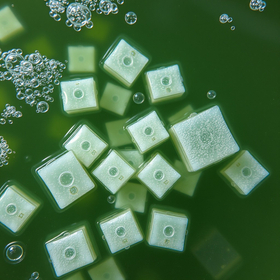
Whether to float microorganisms in water to work or to attach them to a surface to work. I will explain the differences between the biofilm method and the carrier system, and the activated sludge method.
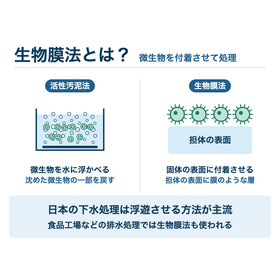
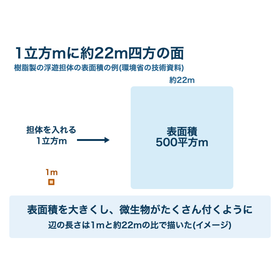
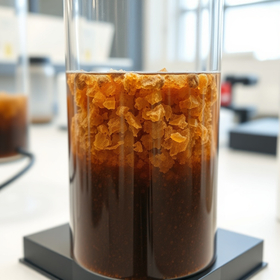
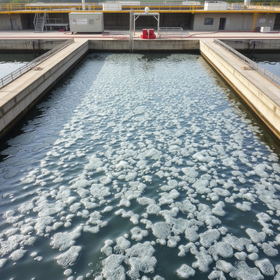
Biological treatment that removes wastewater pollutants using the power of microorganisms can be mainly divided into the following methods based on how the microorganisms are maintained: 1. Suspended: Activated sludge method 2. Attached to a surface: Biofilm method The activated sludge method involves returning a portion of the microorganisms that have settled in the sedimentation tank back to the reaction tank to maintain their quantity. In Japan, the suspended method is the mainstream for sewage treatment. On the other hand, the biofilm method is also used in wastewater treatment for food factories and similar industries. ■ What is a biofilm? When microorganisms are cultivated on the surface of a solid carrier, a layer resembling a film is formed. The biofilm method involves bringing wastewater into contact with this layer, allowing the attached microorganisms to decompose organic matter. In other words, it is a method of treatment using microorganisms that are attached to the surface of a solid. ■ The carrier is the "attachment site" for microorganisms! The material used for attaching microorganisms is called a carrier. Efforts are made to increase the surface area so that many microorganisms can attach to it. Some resin-based floating carriers have a surface area of 500 square meters per cubic meter. This is equivalent to the area of a square with each side measuring about 22 meters fitting into one cubic meter. Please feel free to consult us first.
basic information
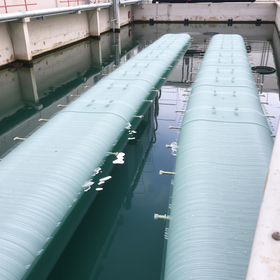
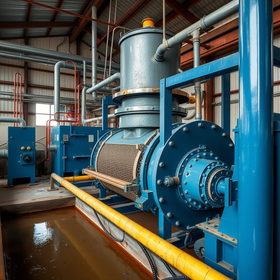
■Main Methods of Biological Film Process There are the following methods in the biological film process: 1. Contact oxidation method 2. Trickling filter method 3. Immobilized microorganism method 4. Rotating biological contactor method 5. Aerobic filter method All of these share the common point of retaining microorganisms on the surface of a solid. ■What is a contact oxidation device? A biological contact oxidation device is one that submerges packing materials such as strings, rings, or honeycomb and corrugated plates in an aeration tank to cultivate a biological film on their surfaces. ■Method without returning sludge In the suspended carrier method, the sludge collected in settling tanks is not returned to the aeration tank. This is a significant difference from the activated sludge method. The carrier is retained in the tank by a screen, but fine suspended solids (SS) flow out, so they are separated by coagulation and sedimentation or pressurized flotation. ■With biological film, the nitrification rate can be about three times higher! Nitrifying bacteria that oxidize ammonia tend to form flocs poorly, so methods to increase concentration using carriers may be employed. The nitrification rate of the biological film method is about three times that of the suspended method. It can be configured without a settling tank, making sludge management easier, and if a settling tank is provided, SS and phosphorus can also be removed simultaneously through coagulation and sedimentation.
Price range
Delivery Time
Applications/Examples of results
■There is also a method to introduce carriers into the activated sludge tank! To stabilize the retention of microorganisms, there is a biological film method that involves placing fixed contact materials or floating carriers in the aeration tank of activated sludge. ■Do floating carriers also help with oxygen dissolution?! Floating carriers made of resin are slightly lighter than water and flow within the tank due to air bubbles. By dispersing the bubbles and extending the time they remain in the water, they also enhance the rate at which oxygen dissolves. ■Can be used for high concentration wastewater! Biological film treatment using floating carriers can directly treat high concentration wastewater with BOD levels of 5,000 mg/L. When used for pretreatment, it allows for subsequent activated sludge treatment without dilution. In an example with a carrier filling rate of 67%, the guideline for BOD volumetric loading when aiming for a BOD removal rate of over 90% is 2.0 to 4.0 kg per cubic meter per day. This value is under the condition that the soluble BOD of the treated water is below 20 mg/L. ■Don't forget the subsequent processes Biological contact oxidation systems typically do not filter turbidity (SS), so they are often combined with coagulation sedimentation or sand filtration in the subsequent processes. Please feel free to consult with us first.
catalog(3)
Download All Catalogs
Recommended products
Distributors

Since our founding, we have continued to provide flexible services with the motto of accurately supplying a diverse range of products that respond to changes in the times and the diversification of consumer needs, tailored to various applications and requirements. With the corporate slogan "Chemical Engineering Partner," we, as a group of experts in chemical technology, actively discover ideas to solve our customers' problems from advanced technologies both domestically and internationally, and propose them.