
What is the sprinkling bed method? Biological treatment without using a blower [Basic knowledge]
A method of sprinkling wastewater onto a substrate and decomposing organic matter with a biological film on the surface, known as the sprinkler biofilter method. It explains the reasons why a blower is not needed, as well as the weaknesses such as winter water temperature and biofilter flies.
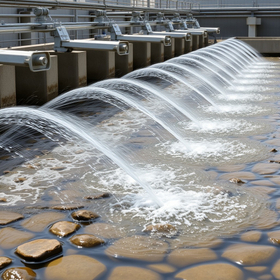
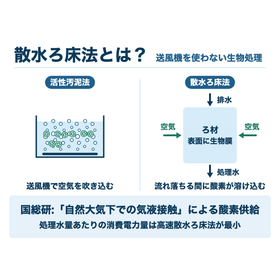
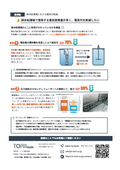
■Mechanism of the Sprinkler Filter Method The sprinkler filter method is one of the biological membrane methods. Wastewater is sprayed over a tank filled with filter media (support), and organic matter is removed by the microbial film (biofilm) attached to the surface of the filter media, allowing treated water to be collected from below. The filter media remains stationary, while the wastewater flows from top to bottom. This differs from the activated sludge method, where microorganisms are suspended in water. ■Why is a blower unnecessary? In the activated sludge method, a blower is used to supply oxygen to the microorganisms by blowing air into the system. The electricity consumed by this blower can contribute to increased energy usage. In the sprinkler filter method, as the wastewater flows over the surface of the filter media, it comes into contact with the surrounding air, allowing oxygen to dissolve into the water. This mechanism introduces oxygen through "gas-liquid contact," where water and air interact under natural atmospheric conditions. ■How much lower is the power consumption?! When comparing the energy consumption per volume of treated water for different wastewater treatment methods, the high-speed sprinkler filter method has the lowest consumption. There are design examples where the sprinkler device operates automatically without power, driven by water pressure. Please feel free to consult us first.
basic information
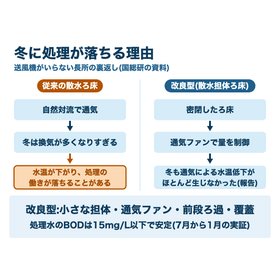
■Conventional media such as gravel In the traditional trickling filter method, relatively large carriers such as gravel are used, and the aeration of the filter bed is achieved through natural convection. The surface area of the media becomes the area where the biofilm attaches. ■Why does treatment decrease in winter? Because air is exchanged through natural convection, especially in winter, excessive ventilation can lower the water temperature, which may reduce the effectiveness of microbial treatment. This can be seen as a downside of not requiring a blower. In the improved version introduced later, there was almost no decrease in water temperature due to ventilation even in winter. ■Is the organic matter removal rate not high?! Compared to the activated sludge method, the trickling filter method has a lower organic matter removal rate. While it does not incur electricity costs for the blower, it compromises on treatment performance. It is important to verify whether it meets the desired effluent quality before making a selection. There are also issues such as filter fly problems. ■Was maintenance of the spray nozzles also necessary? In the traditional trickling filter method, it was necessary to regularly clean the spray nozzles. This is because solids contained in the effluent can cause clogging of the nozzles. By removing solids in the preceding stage, clogging is less likely to occur.
Price range
Delivery Time
Applications/Examples of results
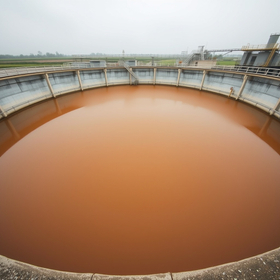
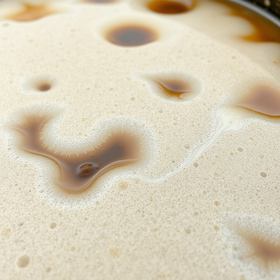
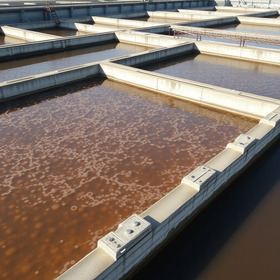
■What is a wetland fly? In a sprinkler wetland, wetland flies and snails may occur. Immersion cleaning, which involves soaking the wetland in water and then draining it, is effective in eliminating wetland fly larvae and snails. ■There are improved types that utilize the principle! An improved type that utilizes the principle of the sprinkler wetland method is the "sprinkler carrier wetland." The main innovations that address the weaknesses of the conventional method are as follows: 1. Small carriers: Increases specific surface area to enhance biological reactions. 2. Ventilation fan: Supplies a controlled amount of air to the sealed wetland. 3. Pre-filtration: Removes solids to prevent clogging of the sprinkler nozzles. 4. Covering: Prevents the dispersal of wetland flies and leakage of odors. ■Demonstration results of the improved type In demonstration studies, the BOD (biochemical oxygen demand) of the treated water remained stable at below 15 mg/L throughout three seasons from July in summer to January in winter. Therefore, it can be applied to wastewater treatment plants where the planned effluent quality has a BOD exceeding 10 mg/L but below 15 mg/L. Our company offers consultations regarding the chemicals used for the operation and maintenance of biological treatment facilities. Please feel free to contact us.
catalog(2)
Download All Catalogs
Recommended products
Distributors

Since our founding, we have continued to provide flexible services with the motto of accurately supplying a diverse range of products that respond to changes in the times and the diversification of consumer needs, tailored to various applications and requirements. With the corporate slogan "Chemical Engineering Partner," we, as a group of experts in chemical technology, actively discover ideas to solve our customers' problems from advanced technologies both domestically and internationally, and propose them.