
What is sewage treatment plant sludge? The process of extraction and treatment [Basic Knowledge]
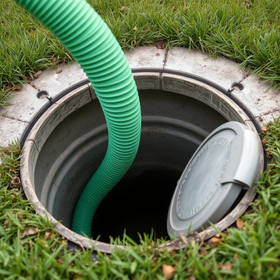
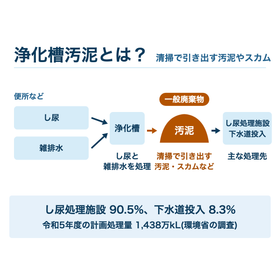
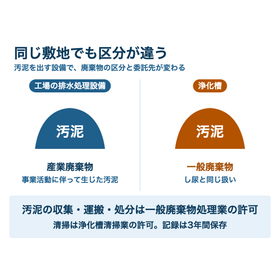
Sludge from drainage treatment is classified as industrial waste, while sludge from septic tanks is classified as general waste. This explains the differences in classification and the flow from extraction to treatment.
Septic tank sludge refers to the sludge and scum extracted from the tank during the cleaning of the septic tank. The Septic Tank Law defines a septic tank as a facility that processes wastewater in conjunction with toilets, handling both human waste and general wastewater. Special discharges such as industrial wastewater and rainwater are excluded from this general wastewater. ■ Is it different from sludge in wastewater treatment? Under the Waste Management Law, sludge generated from business activities is classified as industrial waste, which includes sludge from factory wastewater treatment facilities. On the other hand, septic tank sludge is treated as general waste, similar to human waste. To collect, transport, and dispose of sludge extracted during cleaning as a business, a permit for general waste management is required. The enforcement order of the Waste Management Law also includes provisions regarding the landfill disposal of sludge related to septic tanks within the standards for general waste treatment. ■ How much is generated? The planned processing amount of septic tank sludge for fiscal year 2023 is 14.38 million kL. The septic tank population for the same year is 22.92 million, accounting for 18.3% of the total population. This roughly translates to about 1 in 5 to 6 people. Please feel free to consult with us.
basic information
■How many times a year is cleaning required? According to Article 10 of the Sewage Treatment Tank Law, the sewage treatment tank manager must conduct maintenance inspections and cleaning of the sewage treatment tank once a year. However, the ministerial ordinance stipulates that for aeration tanks, cleaning must be done at least once every six months. Cleaning can be entrusted to a sewage cleaning contractor authorized by the mayor. The cleaning records must be kept by the sewage treatment tank manager for three years. ■It doesn't necessarily mean complete removal! The technical standards for cleaning in the ministerial ordinance specify the amount to be removed based on the type of tank: 1. Sedimentation separation chamber, sludge storage tank, etc.: Remove all sludge and scum. 2. Disinfection tank, aeration tank without sludge transfer device, etc.: Remove an appropriate amount of sludge and scum. 3. Aeration tank (sewage treatment tank without sludge storage tank): Remove to maintain an appropriate concentration of suspended solids in the mixed liquid after filling with water. ■Post-removal tasks After removal, cleaning of the equipment may be performed as necessary, and tap water may be used for filling some tanks. During cleaning when usage is suspended, all contents must be removed. Additionally, it is stipulated that necessary measures must be taken to ensure that the removed sludge and other materials are properly treated.
Price range
Delivery Time
Applications/Examples of results
■Where does the extracted sludge go? In the fiscal year 2023, out of 14.38 million kL of sewage treatment plant sludge, 13.01 million kL (90.5%) is processed at sewage treatment facilities. The next highest amount is sent to the sewer system, accounting for 1.19 million kL (8.3%). When combined with the sludge from portable toilets, a total of 19.22 million kL is processed, with 98.8% handled either at sewage treatment facilities or through sewer system input. The residue produced after processing at sewage treatment facilities, including that from portable toilets, amounts to 690,000 tons, of which 69.8% is incinerated at the facility or at waste incineration facilities. ■Things to confirm at factories and businesses 1. Type of equipment: Is it a sewage treatment plant for domestic wastewater or equipment for treating wastewater from production processes? 2. Contractor: Does the cleaning have the permit for sewage treatment cleaning, and do the transportation of sludge and other activities have the permit for general waste disposal? 3. Records: Are maintenance inspection and cleaning records kept for three years? ■Different classifications for each facility It is important to note that even within the same site, the classification of sludge and contractors may vary depending on the equipment. Our company offers inspections of wastewater treatment facilities at businesses and consultations regarding the chemicals used in wastewater treatment. Please feel free to contact us first.
catalog(3)
Download All Catalogs

Recommended products
Distributors

Since our founding, we have continued to provide flexible services with the motto of accurately supplying a diverse range of products that respond to changes in the times and the diversification of consumer needs, tailored to various applications and requirements. With the corporate slogan "Chemical Engineering Partner," we, as a group of experts in chemical technology, actively discover ideas to solve our customers' problems from advanced technologies both domestically and internationally, and propose them.