
What is a power plant cooling tower? The structure of a giant tower [Basic Knowledge]
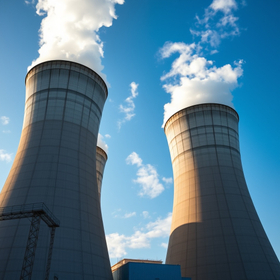
A massive cooling tower of a power plant with a waist in the middle. This explains the mechanism of air flow without fans and how to dispose of the heat from the warmed cooling water.
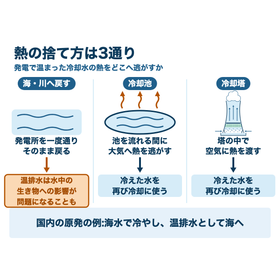
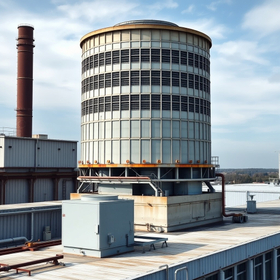
The large tower often seen in photos of overseas power plants, which has a wide base and a narrow middle, is called a natural draft cooling tower. It looks like a chimney, but it is not a facility that emits exhaust gases from burning fuel; rather, it is a facility designed to cool heated cooling water from power generation using the atmosphere. ■ Why do power plants need to cool? In nuclear power plants, steam that has finished turning the turbines is sent to a condenser, where it is cooled by cooling water and returned to water. At this time, a large amount of cooling water is required, and the cooling water absorbs heat and warms up. ■ How do Japan's nuclear power plants cool? In domestic nuclear power plants, seawater is used as cooling water, and the warmed seawater is returned to the sea as warm discharge. The cooling water goes through the power plant and then directly returns to the sea. ■ What do power plants far from the sea do? In addition to returning heat to the sea or rivers, there are cooling ponds and cooling towers. In cooling ponds, warm water loses heat to the atmosphere as it flows through the pond, while in cooling towers, heat is transferred to the air inside the tower. In both cases, the cooled water is reused for cooling. On the other hand, warm discharge can sometimes raise concerns about its impact on aquatic life. Please feel free to consult with us first.
basic information
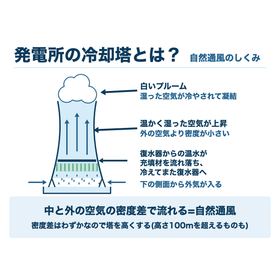
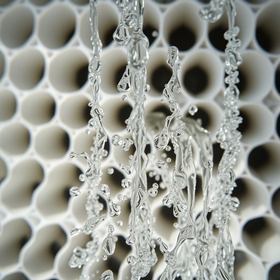
■Is air flowing without a fan? The air inside the tower receives heat and moisture from the warm water, becoming warm and humid. This air is less dense than the outside air, causing it to rise, while outside air is drawn in from below. This difference in density creates ventilation, which is called natural ventilation. ■What is the purpose of the height? The density difference between the inside and outside of the tower is slight, so to strengthen the force that draws in air, the tower needs to be tall. Therefore, towers are built large, with some exceeding 100 meters in height. ■Why is it shaped like a waist? The sides of the tower are shaped like hyperbolas. This shape smoothly guides the incoming air to the center of the tower, aiding the flow inside. ■Inside, water falls like rain. Warm water flows down through the packing material at the bottom of the tower, while the air that enters from the lower side passes through in between. The water droplets lose heat through evaporation and cool down, returning to the condenser. ■What is the identity of the white smoke? The air that exits from the top of the tower is nearly saturated humid air. When this is cooled by the outside air and condenses, it becomes visible as a white plume. In other words, what appears white is not exhaust gas but moisture.
Price range
Delivery Time
Applications/Examples of results
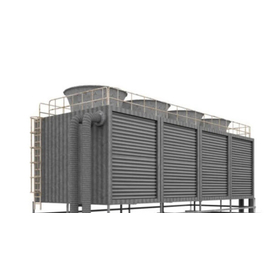
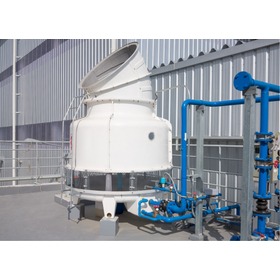
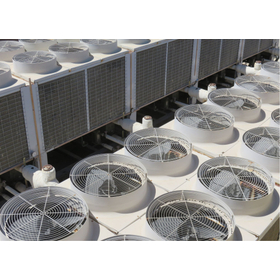
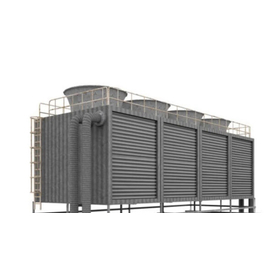
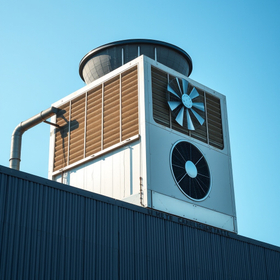
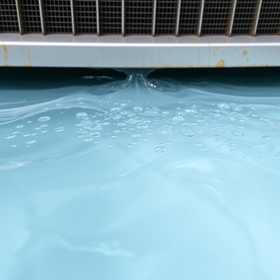
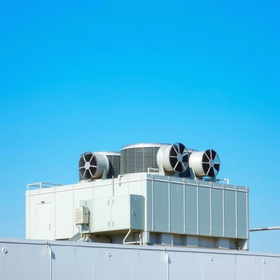
■Differences from cooling towers in buildings and factories 1. Airflow method: Large towers at power plants use natural ventilation due to density differences, while cooling towers used in buildings and factories draw in outside air with fans. 2. Size: Towers at power plants can exceed 100 meters in height. 3. Cooling target: Power plants cool the water in condensers, while buildings and factories cool water for air conditioning and production equipment. ■Is the cooling by evaporation the same? Both types of towers utilize the property that when a portion of the cooling water evaporates, it absorbs heat. As water evaporates, the remaining cooling water becomes more concentrated with dissolved components. In cooling water for buildings, the concentration of organic substances due to evaporation, along with exposure to sunlight and the atmosphere, is one of the conditions that promote the growth of microorganisms and algae. Therefore, regardless of size, it is essential to monitor the quality of cooling water during operation. ■Consultation on cooling water management Our clients primarily include cooling towers in buildings and factories, but measures against scaling, corrosion, and microbial growth due to the concentration of cooling water are necessary management practices regardless of the size or type of tower. We also offer consultations on the selection of water treatment agents for cooling towers and methods for chemical dosing. Please feel free to reach out to us for inquiries.
catalog(1)
Download All Catalogs
Recommended products








Distributors

Since our founding, we have continued to provide flexible services with the motto of accurately supplying a diverse range of products that respond to changes in the times and the diversification of consumer needs, tailored to various applications and requirements. With the corporate slogan "Chemical Engineering Partner," we, as a group of experts in chemical technology, actively discover ideas to solve our customers' problems from advanced technologies both domestically and internationally, and propose them.