
Battery slurry dispersion testing service



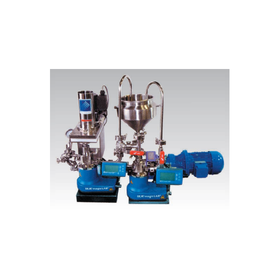
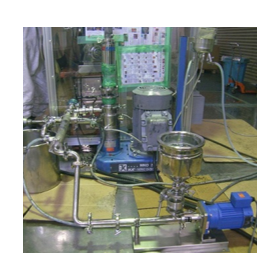
Verify before failing in mass production. Confirm the reproducibility of slurry dispersion in advance.
In the dispersion process of battery slurry, it is often observed that while dispersion can be achieved without issues during the research phase, it cannot be replicated during mass production, leading to quality problems. This is particularly true for positive and negative electrode slurries and CNT conductive materials, where variations in powder input conditions, dispersion energy, viscosity changes, and differences in process configuration can significantly alter the dispersion state and coating properties. Our service conducts dispersion tests at the lab scale based on the customer's materials and formulation conditions, evaluating the dispersion state, viscosity characteristics, and reproducibility. Furthermore, we support scale-up verification using small machines and pilot equipment, visualizing risks during mass production in advance. This is not just a simple test; through verification that delves into process design, we assist in reducing troubles during the transition to mass production and shortening the startup period.
basic information
- Target: Positive electrode slurry, negative electrode slurry, CNT conductive material paste - Corresponding content: Dispersion tests, viscosity evaluation, dispersion state confirmation, process condition examination - Verification scope: Powder input conditions, dispersion conditions (shear force, time), circulation conditions - Scale: Supports lab machines, small machines, and pilot facilities - Evaluation content: Dispersion uniformity, aggregation state, viscosity characteristics, reproducibility - Output: Optimal process conditions, scale-up guidelines, equipment configuration proposals - Target users: Research and development, production technology, equipment examination personnel - Features: Evaluation and design as a whole process rather than just individual equipment
Price information
It varies depending on the specifications.
Delivery Time
Model number/Brand name
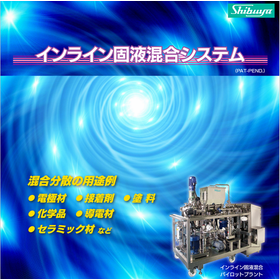
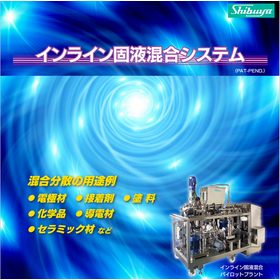
Inline solid-liquid mixing and dispersion system for battery materials
Applications/Examples of results
【For those who】 - Things work well in the lab but cannot be reproduced in mass production - Want to clarify the relationship between dispersion state and battery performance - Slurry viscosity is high and mixing conditions cannot be determined - Dispersion state of conductive materials is unstable - Want to eliminate risks before equipment installation 【What can be gained from testing】 - Visualization of dispersion state (elimination of clumps and aggregation) - Optimal balance between viscosity and dispersion - Clarification of reproducibility conditions during mass production - Decision-making materials for equipment specifications 【Next action】 Please share your current materials, formulation conditions, and challenges. We will propose the optimal test content.
Detailed information
-
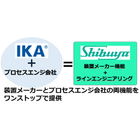
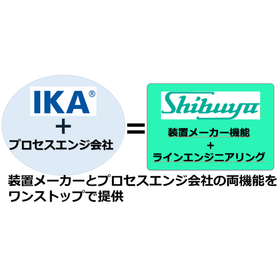
The globally renowned IKA Group and Shibuya Kogyo have been collaborating on business and technology since 2010, working together on inline continuous dispersion systems.
-
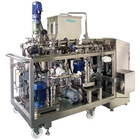
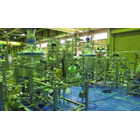
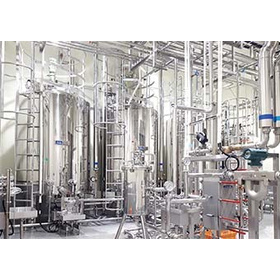
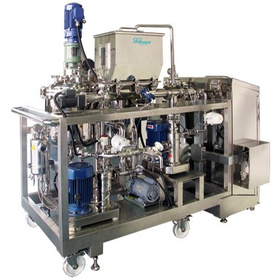
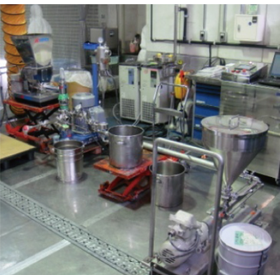
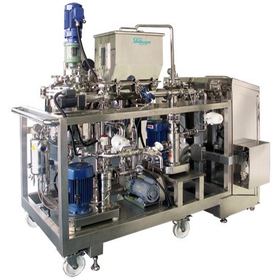
Inline solid-liquid mixing pilot plant. It achieves stable dispersion while suppressing clumping through continuous mixing. It supports space-saving and short processing times, allowing for consistent scale-up considerations from research and development to mass production.
-
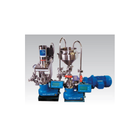
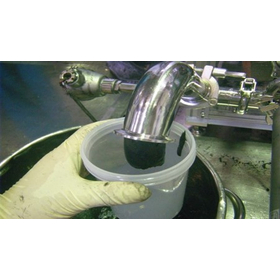
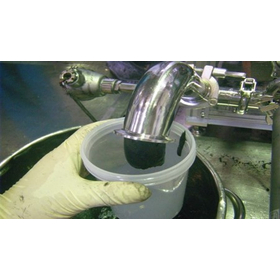
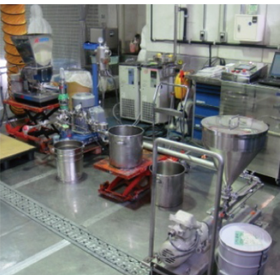
It is a small experimental device that can be used on a tabletop. It can be utilized in the early stages of process examination.
Related Videos
Line up(1)
| Model number | overview |
|---|---|
| Inline solid-liquid mixing dispersion system |
catalog(4)
Download All Catalogs


News about this product(2)
-
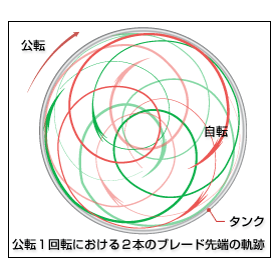
What are the reasons for the inability to disperse high-viscosity slurries? The mechanisms behind poor dispersion and design points for solutions.
In the dispersion process of high-viscosity slurries, issues such as "not being dispersed despite being mixed" and "remaining clumps" occur. The main cause of these problems is that the increase in viscosity reduces fluidity, preventing dispersion energy from being evenly transmitted throughout the system. Generally, dispersion breaks apart agglomerated particles through shear force, but in a high-viscosity state, the flow becomes localized, leading to differences between areas experiencing shear and those that do not. As a result, undispersed areas and agglomerates remain, causing variations in particle size distribution and quality issues. Furthermore, the higher the viscosity, the weaker the circulation within the equipment, making it difficult for particles to pass uniformly through the processing area, which also decreases reproducibility. In batch processing, variations in residence time and mixing state become particularly pronounced, making it easier for lot differences to occur. To achieve stable dispersion in high-viscosity systems, not only shear enhancement but also flow design and ensuring circulation are important. By simultaneously controlling flow and shear, as in inline continuous processing, uniform and highly reproducible dispersion can be achieved. Additionally, the wettability of the powder and the method of introduction during the initial dispersion are also crucial; if the initial dispersion is insufficient, the subsequent breaking efficiency decreases.
-
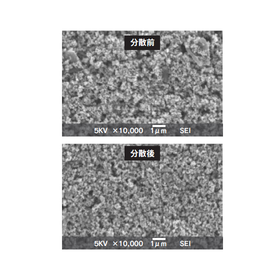
Why does slurry settle? An explanation of the causes of instability after dispersion and key points for dispersion design and process improvement to prevent settling.
Even slurries that appear uniform after dispersion often face challenges of instability in quality due to sedimentation and separation over time, which is commonly observed in many settings. This phenomenon is not merely a result of insufficient stirring; it is influenced by the aggregation state of the particles, a lack of dispersion energy, and complex inter-particle interactions in the liquid. Particularly in the case of nanoparticles or high solid content slurries, even slight dispersion issues can significantly affect sedimentation behavior, leading to variations in product performance. Additionally, batch processing is susceptible to changes in state over time, making it difficult to ensure reproducibility. To suppress sedimentation, it is crucial to not only mix but also to break down particles to the primary particle level and achieve uniform dispersion. Furthermore, maintaining consistent shear conditions, as in inline continuous processing, can help stabilize the dispersion state and ensure uniform quality. Designing the dispersion state throughout the entire process is key to producing stable slurries that do not sediment.
Recommended products






Distributors

Our company is headquartered in Kanazawa City, Ishikawa Prefecture, and has sales offices and factories both within and outside the prefecture. We focus on the bottling business, which involves filling beverages and other products, and we are expanding into various fields such as solid-liquid mixing and dispersion systems, laser processing machines (including fiber lasers and CO2 lasers), and semiconductor assembly equipment (such as taping machines, multifunctional test handlers, ball mount machines, and bonders). Please feel free to contact us if you have any inquiries.