
Adhesive dispersion test service



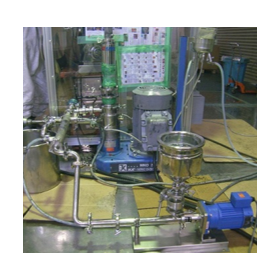
The strength is determined by the variance. Visualize quality variations through testing before mass production.
The performance of adhesives greatly depends on the dispersion state of fillers and additives, and even slight differences in dispersion can affect adhesion strength, durability, and appearance quality. Particularly in highly filled systems, issues such as clumping, undispersed particles, and poor mixing due to viscosity increases are likely to occur, leading to variations in dispersion and quality due to sedimentation and separation. These challenges often stem not from the equipment alone but from input conditions, dispersion conditions, and process composition, manifesting as problems that cannot be reproduced during mass production. In this service, we conduct dispersion tests based on the customer's materials and formulation conditions to evaluate the dispersion state, viscosity characteristics, and their impact on adhesive performance. Furthermore, we perform scale-up verification using small machines and pilot equipment to clarify the reproducible conditions for mass production. By conducting thorough verification that delves into process design, we support quality stability and reduction of development time.
basic information
- Target: Various adhesives (epoxy, acrylic, urethane, sealants, etc.) - Response Content: Dispersion testing, viscosity evaluation, dispersion state confirmation, adhesive property evaluation - Verification Scope: Powder input methods, dispersion conditions (shear force, time), mixing order, circulation conditions - Target Materials: Inorganic fillers, carbon materials, functional additives, etc. - Scale: Laboratory machines, small machines, pilot equipment support - Evaluation Content: Dispersion uniformity, agglomeration state, viscosity stability, impact on adhesive strength - Output: Optimal process conditions, scale-up guidelines, equipment configuration proposals - Features: Evaluation that delves into the relationship between dispersion state and adhesive performance
Price information
Please consult separately.
Delivery Time
Model number/Brand name
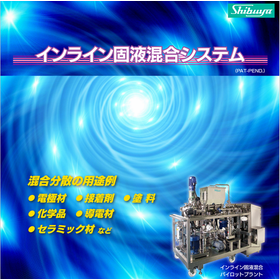
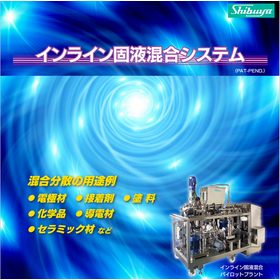
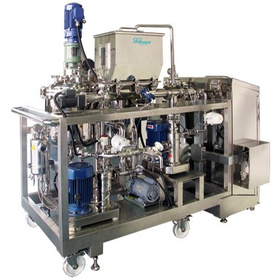
Inline solid-liquid mixing dispersion system
Applications/Examples of results
【Challenges like these】 - Fillers are not evenly dispersed, leading to unstable strength - Appearance defects occur due to clumps and undispersed materials - High filling increases viscosity, making mixing difficult - Long-term stability cannot be ensured due to sedimentation and separation - The dispersion state cannot be reproduced during mass production 【What can be obtained from testing】 - Visualization of the relationship between dispersion state and adhesion strength - Causes of clumps and undispersed materials, along with improvement conditions - Optimal balance between viscosity and workability - Reproduction conditions and equipment requirements for mass production Please share your current material, formulation, and process challenges. We will propose the optimal testing content.
Detailed information
-
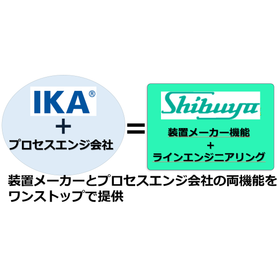
The world-renowned IKA Group and Shibuya Kogyo have been collaborating on business and technology since 2010, working together on inline continuous dispersion systems.
-
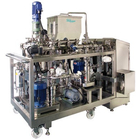
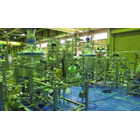
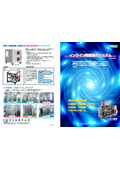
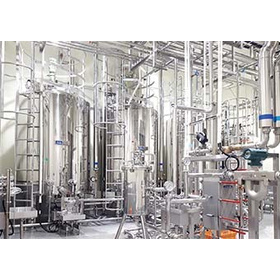
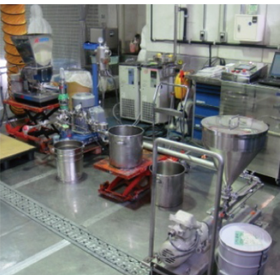
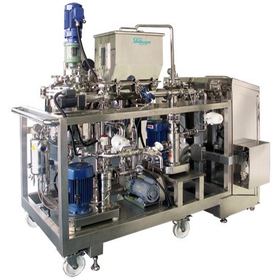
Inline solid-liquid mixing pilot plant. It achieves stable dispersion while suppressing agglomeration through continuous mixing. It supports space-saving and short processing times, allowing for consistent scale-up considerations from research and development to mass production.
-
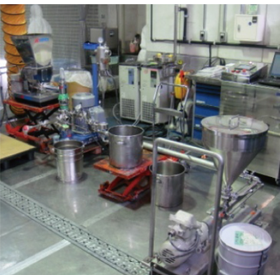
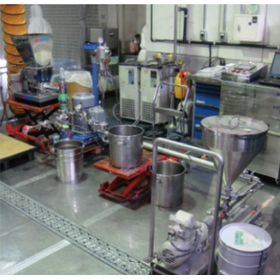
It is a small experimental device that can be used on a tabletop. It can be utilized in the early stages of process evaluation.
Related Videos
Line up(1)
| Model number | overview |
|---|---|
| Inline solid-liquid mixing dispersion system |
catalog(3)
Download All Catalogs

Recommended products






Distributors

Our company is headquartered in Kanazawa City, Ishikawa Prefecture, and has sales offices and factories both within and outside the prefecture. We focus on the bottling business, which involves filling beverages and other products, and we are expanding into various fields such as solid-liquid mixing and dispersion systems, laser processing machines (including fiber lasers and CO2 lasers), and semiconductor assembly equipment (such as taping machines, multifunctional test handlers, ball mount machines, and bonders). Please feel free to contact us if you have any inquiries.