
How to Make Pure Water? Comparison of Ion Exchange, RO, and Distillation [Basic Knowledge]
Whether to separate by heat, by membrane, or by exchanging ions. We will compare the three methods based on the materials used, the products obtained, and the differences in components that are challenging to handle.
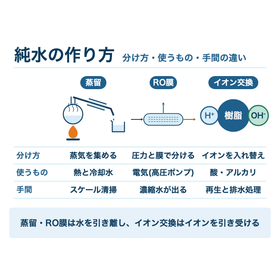
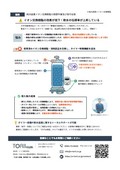
The main methods for producing pure water include distillation, RO membranes (reverse osmosis membranes), and ion exchange. All of these methods reduce impurities in water, but since the principles of separation differ, the required energy, chemicals, operational effort, and byproducts from the equipment also vary. Here, we will compare them by focusing on "what they use and what they produce." ■ What do the three methods use for separation? 1. Distillation: Collects only the steam generated by boiling and condenses it. 2. RO membrane: Uses pressure to separate water that passes through the membrane from components that do not. 3. Ion exchange: Replaces ions in the water with hydrogen ions or hydroxide ions from the resin. The difference is that distillation and RO membranes separate water from impurities, while ion exchange allows the resin to take on the ions that are the impurities. ■ Are there components that each method struggles with? RO membranes have difficulty removing dissolved gases, and ion exchange cannot remove organic matter, fine particles, or bacteria. Distillation also has components that it cannot remove on its own. Therefore, in factories, it is common to combine multiple methods according to the desired water quality. Please feel free to consult with us first.
basic information
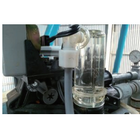
■ Distillation requires cooling water too! In distillation, heat is needed to boil the water, and cooling water is required to condense the steam back into water. Laboratory distillation units can produce about 5 to 8 liters of distilled water per hour, equipped with heaters of several kW, and some require a flow rate of about 2.4 to 2.6 liters of water per minute. When converted to an hourly rate, this amounts to approximately 140 to 160 liters, which is about 20 to 30 times the amount of distilled water obtained. ■ RO membranes apply pressure with electricity In RO membranes, water is pressurized using high-pressure pumps. Since this method removes components from the feed water at a constant ratio, the purity of the obtained water is influenced by the quality of the source water. Additionally, a portion of the supplied water is discharged as concentrated water with increased component concentration. ■ Ion exchange is regenerated with chemicals The exchange capacity of the resin is finite, and as water continues to flow through, the quality of the treated water declines. Therefore, it is regenerated with acids or alkalis, but each regeneration requires management of the chemicals and treatment of the wastewater. ■ Do distillers also require maintenance? Even distillers require regular maintenance, such as cleaning the scale that builds up inside the device.
Price range
Delivery Time
Applications/Examples of results
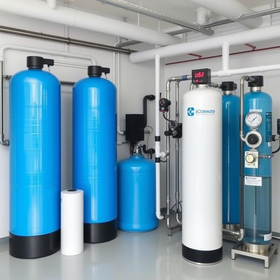
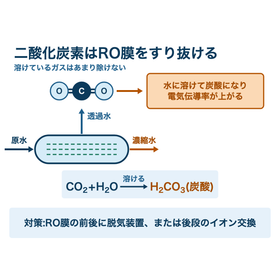
■Why place resin behind the RO membrane? By removing most of the salts with the RO membrane before passing through the resin, the amount of ions that the resin has to handle is reduced. This allows for extending the regeneration intervals. If the amount being processed is small, it may be sufficient to use finishing resin that does not require on-site regeneration. ■Does carbon dioxide slip through the RO membrane? RO membranes do not effectively remove gases like dissolved carbon dioxide. The carbon dioxide that enters the permeate water turns into carbonic acid, which increases electrical conductivity. Therefore, degassing devices are placed before and after the RO membrane, or treatment is done with ion exchange in the subsequent stages. ■EDI: Electric regeneration of resin EDI (Electrically Regenerated Deionization) is a method that combines ion exchange resin and ion exchange membranes to continuously regenerate the resin using electric current. While it does not require regeneration chemicals, it is based on the premise that the quality of the supplied water is high, and it is commonly configured to be placed after the RO membrane. ■Considering the amount used and water quality The appropriate method varies depending on the required water volume and quality, as well as the ability to handle chemicals and wastewater. At Torii, we offer maintenance for pure water systems and consultations for a pure water supply service that can be used at a fixed rate. Please feel free to contact us first.
catalog(3)
Download All Catalogs

Recommended products







Distributors

Since our founding, we have continued to provide flexible services with the motto of accurately supplying a diverse range of products that respond to changes in the times and the diversification of consumer needs, tailored to various applications and requirements. With the corporate slogan "Chemical Engineering Partner," we, as a group of experts in chemical technology, actively discover ideas to solve our customers' problems from advanced technologies both domestically and internationally, and propose them.