
What to do if E. coli is detected? Well water treatment and disinfection [Basic Knowledge]
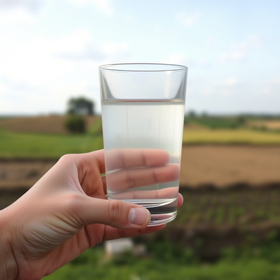
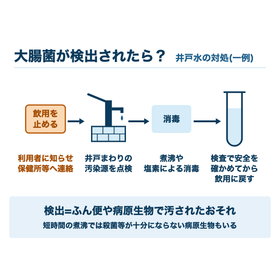
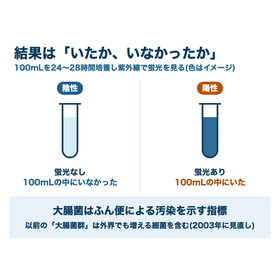
What should you suspect if "E. coli detected" appears in the well water test? This explains the steps from stopping consumption to inspecting the area around the well, disinfection, and confirming safety.
The water quality standards for tap water stipulate that E. coli must be "not detected." According to the testing methods established by the government, a 100 mL water sample is mixed with a specific enzyme substrate medium and incubated for 24 to 28 hours. After exposure to ultraviolet light, the presence or absence of fluorescence is used to determine whether the result is positive or negative. In other words, the result indicates whether E. coli was present or absent in the 100 mL sample, rather than how many were present. It is also required to add sodium thiosulfate to the container when collecting water that contains residual chlorine to neutralize the chlorine. ■ What does "detection" mean? If E. coli is detected, there is a risk that the water has been contaminated with feces or pathogenic organisms. Examples of such pathogenic bacteria include O157. Such contamination cannot be detected by appearance or taste. ■ A different indicator from the E. coli group The previous water quality standard was "E. coli group." However, the E. coli group includes bacteria that can also grow in the environment, which poses a problem as an indicator of fecal contamination. Therefore, in the 2003 review, a policy was established to replace it with E. coli that directly originates from feces. The current water quality standard item is E. coli. Please feel free to consult us.
basic information
■ First, stop drinking! According to the country's guidelines for sanitation measures regarding drinking wells, when it is determined that the supplied water may harm health, the water supply must be immediately stopped, users must be notified, and contact must be made with health authorities for instructions. If it is a well at a business, employees and others who drink the well water will be informed. After stopping consumption, inspections for the cause and disinfection will proceed. ■ Is boiling enough? Boiling is one of the measures that can be taken at home. However, it is important to note that some pathogens may not be sufficiently killed by short boiling times. In cases where infant botulism occurred from well water used for infant formula, it is believed that there were hygiene issues, as E. coli was detected in that well water. ■ A guideline for chlorine-resistant pathogens In the source water of tap water, there is a risk that sources contaminated with feces may contain pathogens such as Cryptosporidium. Therefore, if either E. coli or anaerobic spore-forming bacteria are detected, the water is treated as a source water that may contain chlorine-resistant pathogens. In this way, E. coli is used as an indicator of fecal contamination.
Price range
Delivery Time
Applications/Examples of results
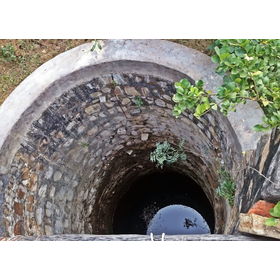
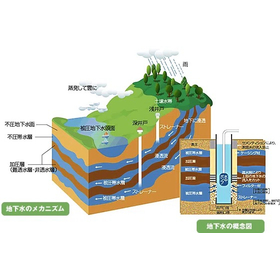
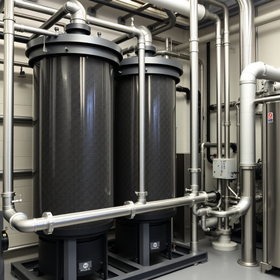
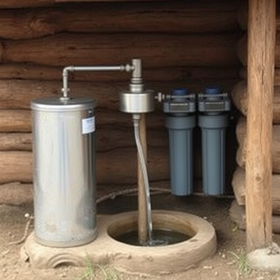
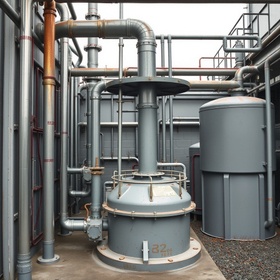
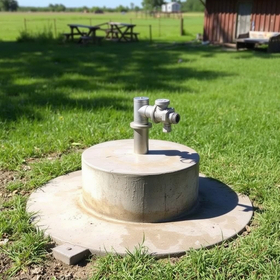
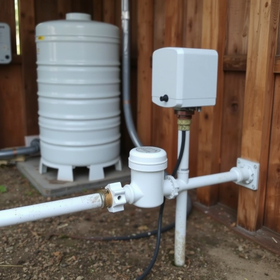
■Where did the contamination come from? Regularly inspect the well, casing, pump, suction pipe, valves, pipes, well cover, water tank, etc., and take measures to protect against contamination sources. Be mindful of any potential causes of groundwater pollution around the well. This is because disinfecting while leaving the source of contamination can lead to recontamination. ■What is the approach to disinfection? When E. coli is detected, disinfection methods include boiling or using chlorine. Install equipment that adds chlorine to drinking well water, and check if the free residual chlorine at the water supply faucet is 0.1 mg/L or higher to confirm the effectiveness of disinfection. ■Be cautious after heavy rain or flooding! Do not drink well water that has been contaminated with muddy water or after flooding immediately; instead, ensure safety through water quality testing and inspection before use. Even well water that looks clean may contain bacteria. ■Resume drinking only after confirming through testing At Torii, you can consult about sodium hypochlorite as a disinfectant and the injection equipment for it. After completing inspections and disinfection, confirm safety through testing before returning to drinking. Please feel free to consult with us first.
catalog(3)
Download All Catalogs


Recommended products







Distributors

Since our founding, we have continued to provide flexible services with the motto of accurately supplying a diverse range of products that respond to changes in the times and the diversification of consumer needs, tailored to various applications and requirements. With the corporate slogan "Chemical Engineering Partner," we, as a group of experts in chemical technology, actively discover ideas to solve our customers' problems from advanced technologies both domestically and internationally, and propose them.