
High-Performance Plastics Exhibition - Invitation to Exhibit at Plastic Japan






From October 29 (Tuesday) to 31 (Thursday), 2024! We will be exhibiting small ultrasonic dispersion devices and ultrasonic generators!
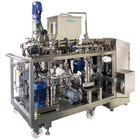
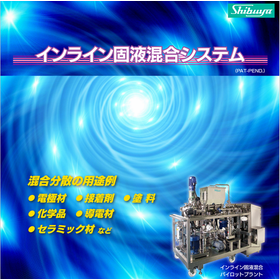
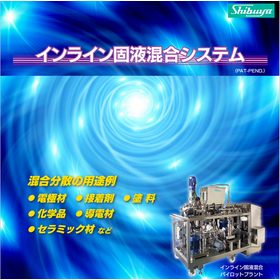
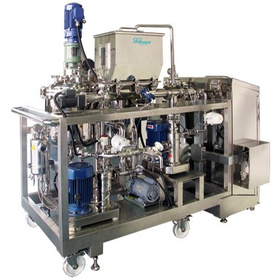
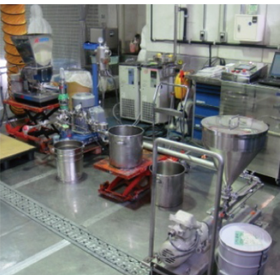
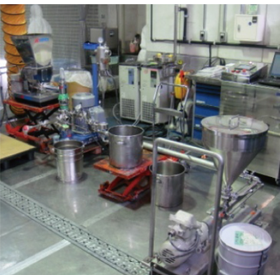
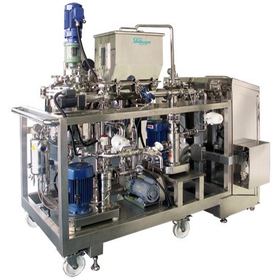
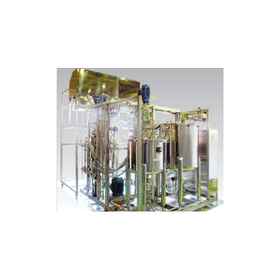
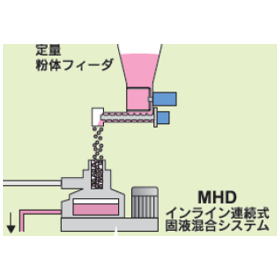
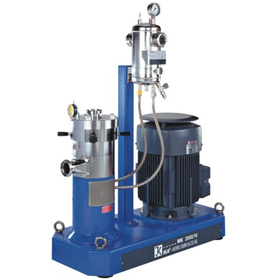
We are pleased to hear that you are doing well. Thank you very much for your continued support. We are excited to announce that our company will be exhibiting at the "13th High-Performance Plastics Exhibition - Plastic Japan" (Makuhari Messe). We will be showcasing the following equipment at our booth, and we would be delighted if you could stop by despite your busy schedule. * Inline Continuous Powder-Liquid Mixing and Dispersion System * Tabletop Inline Dispersion Device * Small Ultrasonic Dispersion Device * Ultrasonic Generator These products utilize continuous mixing and dispersion technology, which dramatically improves production efficiency compared to traditional batch methods. All of our staff are looking forward to welcoming you to our booth. 【Event Information】 * Dates: October 29 (Tuesday) to October 31 (Thursday), 2024 10:00 AM to 6:00 PM (until 5:00 PM on the last day) * Booth Number: Hall 6, Booth Number 35-26 (Plastic Japan Area) * For more details about the exhibition, please refer to the related links. You can download the PDF for more information or feel free to contact us.
basic information
*Invitation Ticket Information* Pre-registration is required. We apologize for the inconvenience, but please register using the link below. Pre-registration here <https://www.material-expo.jp/tokyo/ja-jp/visit/pla.html> We sincerely look forward to your visit despite your busy schedule. *For detailed information about the exhibition, you can view it through the related links. For more information, please download the PDF or feel free to contact us.*
Price range
Delivery Time
Applications/Examples of results
The details of the exhibition can be viewed through the related links. For more information, please download the PDF or feel free to contact us.
Related Videos
catalog(8)
Download All Catalogs



News about this product(11)
-
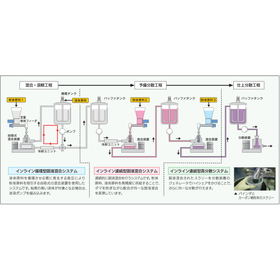
What is decentralized process design? Key points for stabilizing quality.
In dispersion engineering, stable quality cannot be achieved solely based on the performance of the equipment. What is important is the overall design of the process, taking into account material properties and process conditions. This is referred to as dispersion process design. Dispersion quality is determined not only by the strength of shear but also by multiple factors such as flow state, residence time, and method of input. If these conditions are not properly designed, localized agglomeration or variation can occur, making it difficult to maintain stable quality. For example, poor wetting during powder input or the occurrence of stagnant areas due to flow bias can lead to clumping or dispersion issues. Additionally, even if the shear energy is sufficient, if it does not act uniformly on all particles, differences in dispersion state will arise. Therefore, in dispersion processes, it is crucial to design "flow," "shear," and "processing time" as an integrated system. This allows for all particles to receive the same dispersion history, achieving uniform and highly reproducible dispersion quality. In particular, inline continuous processing has the advantage of maintaining consistent conditions within the flow, making it easier to ensure reproducibility in process design. Dispersion process design is a key concept for stabilizing quality and successfully scaling up.
-
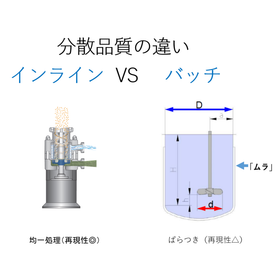
Why is continuous processing highly reproducible? An explanation of the mechanism that stabilizes distributed quality.
In dispersion processes, the variation in quality is one of the significant challenges. Even when processing under the same equipment and conditions, it is not uncommon for the dispersion state to differ from batch to batch. The main factor behind this is the variability in the dispersion history experienced by the particles. In batch processing, the shear and residence time experienced by each particle differ depending on their position and flow state within the tank. As a result, there is a mixture of sufficiently dispersed particles and undispersed particles, leading to variations in quality. This tendency becomes particularly pronounced under high viscosity or high solid content conditions. On the other hand, in continuous processing, particles pass through a consistent processing area, receiving nearly the same dispersion conditions. Because shear energy and residence time can be controlled consistently, the variability in dispersion history is minimized, resulting in a uniform and highly reproducible dispersion state. Moreover, continuous processing is advantageous during scale-up. By adjusting the flow rate, it becomes easier to replicate similar dispersion quality from the lab to mass production. This helps reduce the risk of quality fluctuations during the transition from development to mass production. What is crucial in dispersion processes is to provide the same processing history to all particles. Continuous processing easily meets this condition and is an effective method for stabilizing quality and ensuring reproducibility.
-
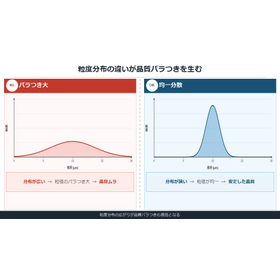
Why does dispersion not become uniform? An explanation of the causes of aggregation residuals and distribution variability, as well as design points to achieve uniform dispersion.
In dispersion engineering, there are many cases where, although the appearance seems mixed, the particles are not actually uniformly dispersed. One of the causes of this is that the aggregation between particles has not been sufficiently resolved. When there is insufficient dispersion energy, the particles do not break down to primary particles, and aggregates remain. Additionally, if the shear conditions or flow state are uneven, the dispersion state can vary locally, resulting in variations in particle size distribution. This is particularly true in high-viscosity systems or high solid content slurries, where low flowability makes it difficult for energy to be transmitted uniformly, leading to dispersion inconsistencies. Furthermore, in batch processing, variations in mixing uniformity and residence time tend to make it difficult to maintain a uniform dispersion state throughout the process. To achieve uniform dispersion, it is important to design dispersion energy according to particle characteristics and to maintain uniform flow conditions in the process design. By maintaining consistent shear conditions, as in inline continuous processing, it is possible to achieve a uniform dispersion state and reproducible quality. The order of input, the wettability of the powder, and the initial mixing state of the dispersion also have a significant impact on uniformity. In particular, if local clumps or uneven distribution occur during powder input, it becomes difficult to resolve them in subsequent dispersion processes, leading to dispersion inconsistencies.
-

What causes clumping when adding powder? Design points for preventing and addressing poor dispersion.
In dispersion processes, the occurrence of agglomerates (clumps) during powder addition, which cannot be resolved in subsequent dispersion stages, is a common issue in many settings. The cause of this is that the powder does not wet uniformly in the liquid, leading to the formation of localized high-concentration areas. These agglomerates are also referred to as "fisheyes," and due to their internal unwetted structure, they are difficult to break apart. Once an agglomerate forms during powder addition, liquid has difficulty penetrating its interior, resulting in only the outer layer being wetted, which makes it hard for the internal particles to be disintegrated. Additionally, depending on the addition position and speed, the powder may float on the liquid surface or remain stagnant without following the flow within the equipment, promoting the formation of agglomerates. Particularly under conditions of high viscosity or high solid content, the low fluidity makes it challenging to achieve uniformity in the initial dispersion stage, leading to a higher likelihood of agglomerates remaining. Such agglomerates may not be completely resolved even with strong shear in subsequent processes, causing variations in the quality of the final product and introducing foreign substances. To prevent the formation of agglomerates, it is crucial to improve wettability during powder addition, ensure appropriate addition positions and flow design, and optimize the initial dispersion. By performing shear and mixing simultaneously right after addition, as in inline powder addition and simultaneous dispersion, it is possible to suppress the formation of agglomerates and achieve stable dispersion quality.
-
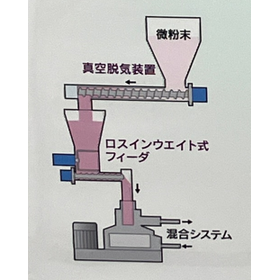
Why can't powders be supplied stably? - What causes supply irregularities in low bulk density powders?
In low bulk density powders and fine powders, issues such as "unstable supply," "pulsation," and "bridging without falling" frequently occur. Particularly with CNTs, carbon black, and flake powders, the particles tend to entangle easily and have low flowability, making stable quantitative supply difficult with conventional powder feeding methods. When powder supply becomes unstable, instantaneous concentration fluctuations occur, significantly affecting the dispersion quality, viscosity, and conductivity in subsequent processes. In practice, even problems that appear to be "poor dispersion" often have their causes on the powder supply side. Moreover, in low bulk density powders, bridging, rat-holing, and supply pulsations due to air entrapment are likely to occur within the hopper, and simply relying on feeder capacity may not resolve these issues. To achieve stable supply, it is crucial to design the entire process, including hopper design, supply methods, transport conditions, and feeding methods, according to the characteristics of the powder. Our company offers a solid-liquid mixing process that includes quantitative supply using loss-in-weight feeders and integration with inline dispersion devices. By designing the entire process from powder supply to dispersion as a cohesive unit, we support the establishment of stable manufacturing conditions even for high-performance materials.
Recommended products






Distributors

Our company is headquartered in Kanazawa City, Ishikawa Prefecture, and has sales offices and factories both within and outside the prefecture. We focus on the bottling business, which involves filling beverages and other products, and we are expanding into various fields such as solid-liquid mixing and dispersion systems, laser processing machines (including fiber lasers and CO2 lasers), and semiconductor assembly equipment (such as taping machines, multifunctional test handlers, ball mount machines, and bonders). Please feel free to contact us if you have any inquiries.