
Protein dispersion test service



Resolve issues of not dissolving and clumping in advance. Test the dispersibility of the protein.
The quality of protein products is greatly influenced by their dispersion state. In particular, powdered protein often faces challenges such as clumping during dissolution in water or solvents, uneven dispersion, and poor mouthfeel. Additionally, changes in formulation or raw materials can alter viscosity and dispersibility, leading to cases where there are no issues during prototyping but quality becomes unstable during mass production. This service conducts dispersion tests tailored to raw material characteristics and formulation conditions, verifying the suppression of clumping, improvement of dispersibility, and enhancement of mouthfeel. Furthermore, through process design aimed at scaling up from the lab to small machines and mass production equipment, we establish reproducible manufacturing conditions. We can support evaluations from the prototyping stage to pre-mass production verification.
basic information
- Target: Powdered protein (whey, soy, and other functional powders) - Corresponding content: Dispersion tests, solubility evaluation, clump occurrence evaluation, viscosity measurement - Verification scope: Powder input methods, mixing conditions, dispersion energy, liquid addition conditions - Scale: Consideration for scaling up to lab machines, small machines, and mass production equipment - Evaluation content: Dispersion uniformity, dissolution time, mouthfeel, clump retention status - Output: Optimal dispersion conditions, process design, equipment configuration proposals - Features: Cleaning and hygiene design (CIP compatible) considering food applications
Price information
Please consult separately.
Delivery Time
Model number/Brand name
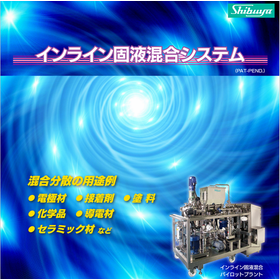
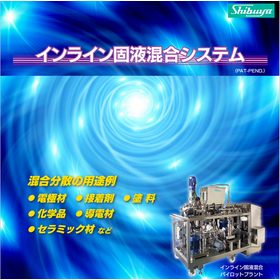
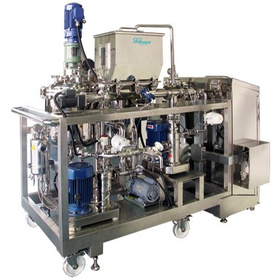
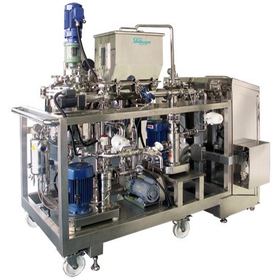
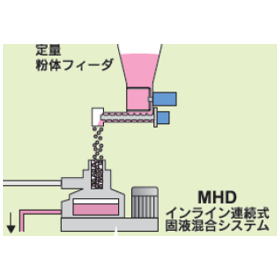
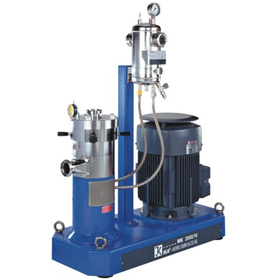
Inline solid-liquid mixing and dispersion system
Applications/Examples of results
【Challenges like these】 - Protein is difficult to dissolve in water - Clumps tend to remain, resulting in a poor mouthfeel - Changes in formulation lead to unstable quality - The dispersion state cannot be reproduced during mass production 【What can be obtained from testing】 - Identification of the causes of clump formation and improvement conditions - Quantitative evaluation of solubility and dispersibility - Optimization of conditions for improving mouthfeel - Clarification of reproducible conditions for mass production We can also accommodate prototype and verification. Please share your current materials and challenges.
Detailed information
-
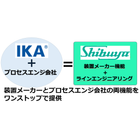
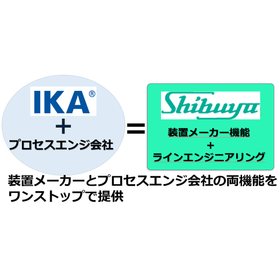
The world-famous IKA Group and Shibuya Kogyo have been collaborating on business and technology since 2010, working together on inline continuous dispersion systems.
-
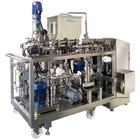
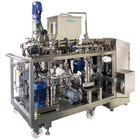
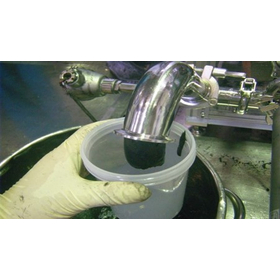
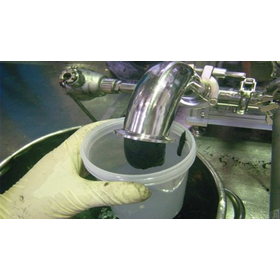
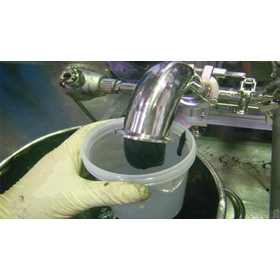
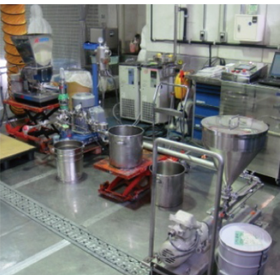
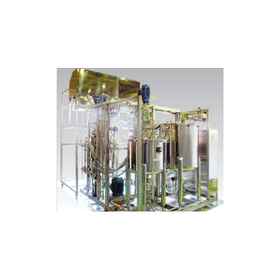
Inline solid-liquid mixing pilot plant. It achieves stable dispersion while suppressing clumping through continuous mixing. It is space-saving and supports short processing times, allowing for consistent scale-up considerations from research and development to mass production.
-
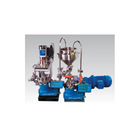
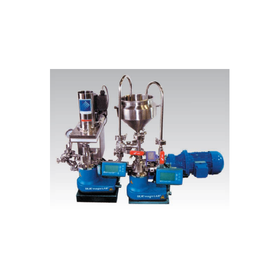
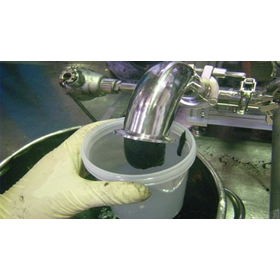
It is a small experimental device that can be used on a tabletop. It can be utilized in the early stages of process evaluation.
Related Videos
Line up(1)
| Model number | overview |
|---|---|
| Inline solid-liquid mixing dispersion system |
catalog(3)
Download All Catalogs

News about this product(2)
-
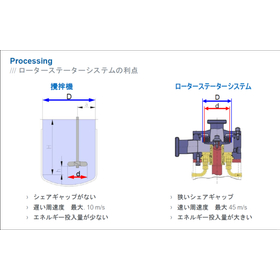
What are the reasons for changes in results from the lab to mass production? Causes and countermeasures for the deterioration of distributed quality during scale-up.
Despite obtaining good dispersion results in the lab, the challenge of unstable quality upon mass production occurs in many settings. The main cause of this is that the dispersion conditions are not replicated due to differences in scale. In lab equipment, the smaller size leads to higher energy density, making shear and flow more uniform, while in mass production equipment, the larger scale often results in insufficient dispersion energy at the same rotational speed and processing time. Additionally, differences in equipment structure and flow patterns can cause variations in the shear history and residence time experienced by particles, leading to differences in the dispersion state. Furthermore, simple scale-up does not ensure that critical parameters such as flow rate, residence time, and shear intensity match, making it difficult to reproduce the same results as in the lab. To address these challenges, it is essential to focus on process design based on dispersion energy density and flow conditions rather than merely increasing equipment size. By designing the system so that particles pass through the processing area under consistent conditions, it is possible to achieve reproducible dispersion quality even when the scale changes, as seen in inline continuous processing.
-

What causes clumping when adding powder? Design points for preventing and addressing poor dispersion.
In dispersion processes, the occurrence of agglomerates (clumps) during powder addition, which cannot be resolved in subsequent dispersion stages, is a common issue in many settings. The cause of this is that the powder does not wet uniformly in the liquid, leading to the formation of localized high-concentration areas. These agglomerates are also referred to as "fisheyes," and due to their internal unwetted structure, they are difficult to break apart. Once an agglomerate forms during powder addition, liquid has difficulty penetrating its interior, resulting in only the outer layer being wetted, which makes it hard for the internal particles to be disintegrated. Additionally, depending on the addition position and speed, the powder may float on the liquid surface or remain stagnant without following the flow within the equipment, promoting the formation of agglomerates. Particularly under conditions of high viscosity or high solid content, the low fluidity makes it challenging to achieve uniformity in the initial dispersion stage, leading to a higher likelihood of agglomerates remaining. Such agglomerates may not be completely resolved even with strong shear in subsequent processes, causing variations in the quality of the final product and introducing foreign substances. To prevent the formation of agglomerates, it is crucial to improve wettability during powder addition, ensure appropriate addition positions and flow design, and optimize the initial dispersion. By performing shear and mixing simultaneously right after addition, as in inline powder addition and simultaneous dispersion, it is possible to suppress the formation of agglomerates and achieve stable dispersion quality.
Recommended products






Distributors

Our company is headquartered in Kanazawa City, Ishikawa Prefecture, and has sales offices and factories both within and outside the prefecture. We focus on the bottling business, which involves filling beverages and other products, and we are expanding into various fields such as solid-liquid mixing and dispersion systems, laser processing machines (including fiber lasers and CO2 lasers), and semiconductor assembly equipment (such as taping machines, multifunctional test handlers, ball mount machines, and bonders). Please feel free to contact us if you have any inquiries.