
Technical Documentation: How to Choose Between Batch and Inline Mixing and Dispersion Processes



[Limited Release] Technical Guide for Considering Optimal Mixing Methods from Powder Feeding, Dispersion, Cleaning, to Scale-Up
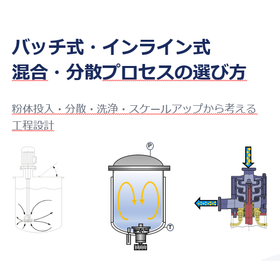
Are you facing these challenges in selecting mixing and dispersion equipment? - Clumps or undissolved particles occur during powder addition. - You want to improve mixing time and cleaning load. - You are considering switching from batch to inline processing. - You want to replicate lab dispersion quality in mass production. This document compares three methods: conventional batch mixing, inline batch mixing, and inline continuous mixing, from the perspectives of powder addition, mixing time, dispersion state management, cleanability, automation, and scale-up. We organize the characteristics of each method and suitable production conditions, and introduce a way of thinking to consider the mixing method that fits your process based on material properties, quality goals, and production conditions. This is a technical document designed to develop the mixing and dispersion process from the perspective of the entire process, rather than just comparing individual equipment.
basic information
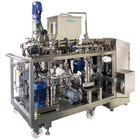
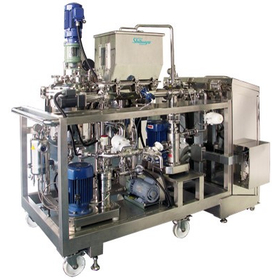
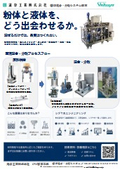
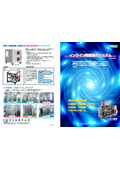
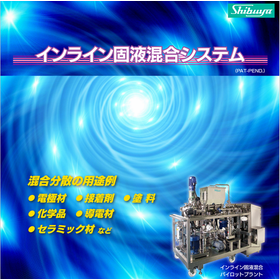
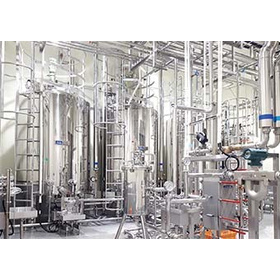
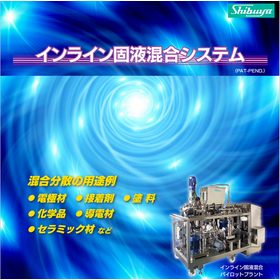
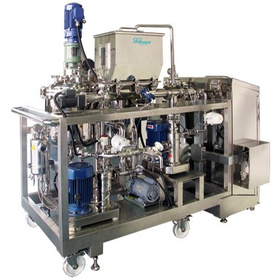
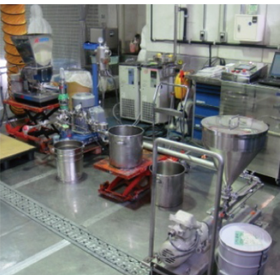
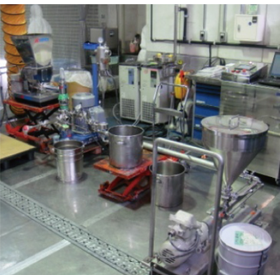
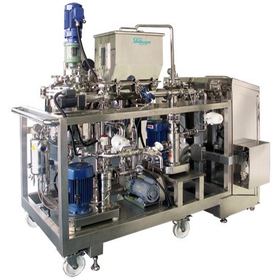
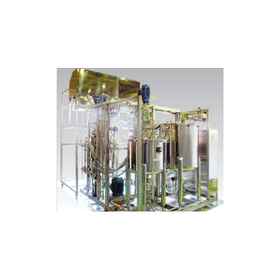
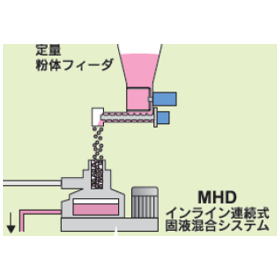
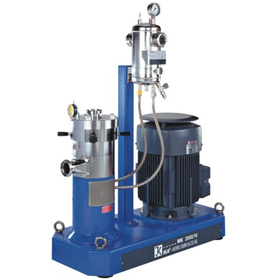
The inline solid-liquid mixing and dispersion system is designed for a seamless process from powder supply to dispersion, blending, and CIP cleaning. It optimizes dispersion energy, input conditions, and fluid design according to the particle size, shape, and content of the filler, suppressing clumps and undispersed materials. It accommodates high-fill systems and high-viscosity materials, achieving both uniform dispersion and workability. It establishes optimal dispersion conditions based on viscosity characteristics and formulation conditions, reducing adhesive strength and quality variations. It can support both continuous and batch processes. Additionally, it flexibly responds to material lot differences and formulation changes, maintaining stable quality. It also supports integration with higher-level production management systems and data logging, assisting in the stable operation of mass production lines.
Price information
It varies depending on the specifications.
Delivery Time
Model number/Brand name
Batch-type inline solid-liquid mixing and dispersion system
Applications/Examples of results
**Main Contents of the Technical Guide** 1. Differences between standard batch, inline batch, and inline continuous processes 2. Powder floating, undissolved particles, and cleaning load during powder addition 3. Methods to improve the mixing process while maintaining batch production 4. Considerations for supply volume, pass count, and processing conditions in inline continuous mixing 5. Comparison table of the characteristics of the three methods 6. Four selection criteria: materials, quality, production, and equipment 7. Checklist for considering the appropriate method for your own process 8. Confirmation items for scaling up from lab to mass production This content organizes each method, including the advantages of standard batch, without assuming a replacement with specific equipment, and supports method selection based on process conditions.
Detailed information
Related Videos
Line up(1)
| Model number | overview |
|---|---|
| Inline solid-liquid mixing dispersion system |
catalog(3)
Download All Catalogs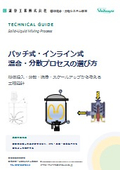
Recommended products






Distributors

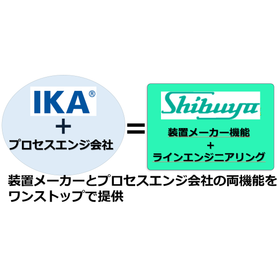
Our company is headquartered in Kanazawa City, Ishikawa Prefecture, and has sales offices and factories both within and outside the prefecture. We focus on the bottling business, which involves filling beverages and other products, and we are expanding into various fields such as solid-liquid mixing and dispersion systems, laser processing machines (including fiber lasers and CO2 lasers), and semiconductor assembly equipment (such as taping machines, multifunctional test handlers, ball mount machines, and bonders). Please feel free to contact us if you have any inquiries.