
What is bulking? Causes of sludge not settling [Basic knowledge]
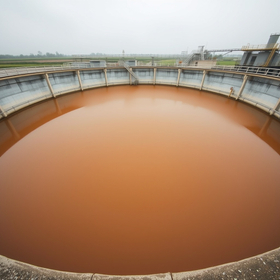
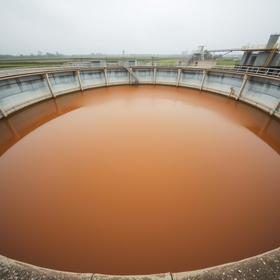
In the sedimentation tank, the sludge does not settle and overflows along with the supernatant... Its true nature might be filamentous bacteria that have proliferated excessively within the sludge?
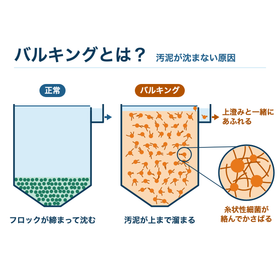
The phenomenon where activated sludge becomes difficult to settle in the sedimentation tank and overflows along with the supernatant is called "bulking." It is a problem in the activated sludge process where sludge and water cannot be separated. ■ Why doesn't it settle properly?! One of the main causes is the excessive growth of filamentous bacteria. When filamentous bacteria proliferate both inside and outside the floc, it forms a loose mass with many gaps, holding a lot of water. When the filaments extend outward, they entangle with each other during the settling process, hindering the compaction at the bottom. Even if the cohesive forces remain, it does not settle completely. ■ Why do filamentous bacteria increase? They are said to thrive under conditions with low oxygen and nutrients, triggered by changes such as: 1. Lack of dissolved oxygen (DO) 2. Insufficient nutrients like nitrogen and phosphorus 3. Operation with loads that are too low or too high 4. Inflow of wastewater rich in sugars or containing sulfides ■ Tracking settleability with numbers It is important to record and organize operational data and establish management benchmarks. SV30 and SVI are indicators that numerically represent the settleability of sludge. Please feel free to consult us first.
basic information
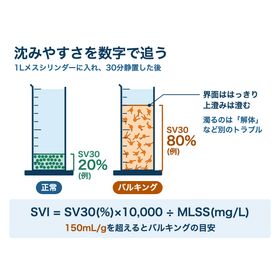
■How to Measure SV30 Take 1L of sludge from the aeration tank into a graduated cylinder and let it sit quietly for 30 minutes. The volume percentage (%) occupied by the settled sludge is the SV30. The more difficult it is for the sludge to settle, the larger the volume will remain even after 30 minutes. However, it is important not to conclude the ease of settling based solely on the numerical value, as a high sludge concentration (MLSS) can also result in a large SV30. ■SVI Eliminates Concentration Differences! SVI (Sludge Volume Index) is the volume (mL) occupied by 1g of sludge. SVI = SV30(%) × 10,000 ÷ MLSS(mg/L) By dividing by MLSS, the influence of concentration is removed, allowing for a comparison of settling ease. Generally, an SVI over 150mL/g is considered an indicator of bulking. ■Caution Even If the Supernatant Is Clear In filamentous bulking, the boundary between the sludge and the supernatant (sludge interface) is distinct, and the supernatant is also considered clear. Cloudiness in the supernatant is a characteristic of other issues, such as the "disintegration" of flocs into finer particles. In SV tests, observing the position of the interface and the clarity of the supernatant can provide clues to the underlying causes.
Price range
Delivery Time
Applications/Examples of results
■Measures by Cause 1. DO deficiency: Adjusting aeration volume 2. Nutrient deficiency: Supplementing nitrogen and phosphorus 3. Load imbalance: Equalizing inflow load using adjustment tanks and adjusting MLSS concentration by removing excess sludge If the conditions that triggered the issue can be resolved, the settleability of the sludge will improve. ■Why is it difficult for coagulants to work? Bulking sludge has a high tendency to clump together, so the effectiveness of coagulants is considered to be limited. While they may work temporarily when introduced into the sedimentation tank, their effectiveness decreases when the sludge returns to the aeration tank, often leading to increased dosages. Aluminum-based coagulants can bind with phosphorus, which may worsen the situation if there is a phosphorus deficiency. ■How about controlling with chlorine agents? Sodium hypochlorite is also used to suppress filamentous bacteria. However, there are reports that this alone does not resolve bulking. ■In what types of facilities is this likely to occur? Facilities that treat wastewater containing high levels of sugars, such as those producing confectionery, bread, or fruit juice using activated sludge methods, are prone to bulking. Please feel free to consult with us first.
catalog(3)
Download All Catalogs
Recommended products
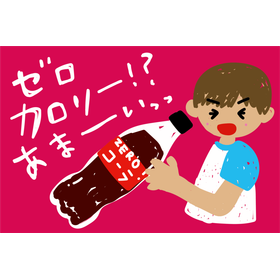
Is there a "sweetness curve" in sweeteners? What are the differences in taste? 【Basic Knowledge】
トリイ









Why are preservatives necessary? What is the key to preventing food poisoning? 【Basic Knowledge】
トリイ






Distributors

Since our founding, we have continued to provide flexible services with the motto of accurately supplying a diverse range of products that respond to changes in the times and the diversification of consumer needs, tailored to various applications and requirements. With the corporate slogan "Chemical Engineering Partner," we, as a group of experts in chemical technology, actively discover ideas to solve our customers' problems from advanced technologies both domestically and internationally, and propose them.