
What is the difference between RO membranes and softeners? Key points for their use.
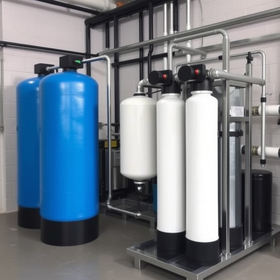
Both are devices that purify water, but they remove different substances. "Soft water = pure water" is not correct.
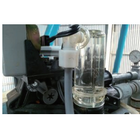
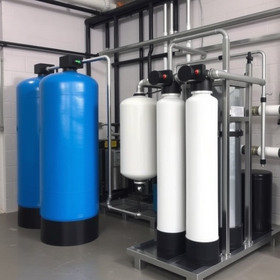
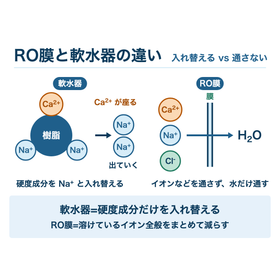
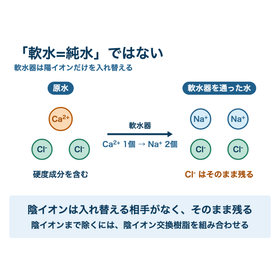
In the production of industrial water, RO membranes and water softeners are often compared. They are mentioned in similar contexts, but their mechanisms and the substances they remove are different. The choice between the two affects the properties of the resulting water and the daily maintenance required. ■ Water Softener is a "Replacement" Device A water softener uses sodium-loaded cation exchange resin to exchange and remove hardness components (calcium and magnesium) dissolved in water with sodium from the resin. When the resin becomes saturated with hardness components, it requires "regeneration" by flushing a solution of table salt (sodium chloride) to restore it. ■ RO Membrane is a "Non-Permitting" Device An RO membrane (reverse osmosis membrane) separates water by applying pressure to pass it through the membrane while preventing impurities such as dissolved ions from passing through. It is characterized by its ability to reduce a wide range of substances, not just hardness components. ■ Where Do the Replaced Ions Go? Since the water softener replaces hardness components with sodium, it does not mean that the dissolved ions in the water disappear. It is an important point that "soft water is not pure water." Please feel free to consult us first.
basic information
■What is hardness? It is the value (mg/L) obtained by adding the amounts of calcium and magnesium in water and expressing it in terms of calcium carbonate. The larger the number, the "harder" the water. ■What is considered hard water? According to the WHO (World Health Organization) drinking water guidelines, it is classified as follows: 1. Soft water: 0–60 mg/L 2. Moderately hard water: 60–120 mg/L 3. Hard water: 120–180 mg/L 4. Very hard water: 180 mg/L and above ■There are ions that cannot be removed by water softeners! Water softeners only use cation exchange resins. Anions, such as chloride ions, remain in the water because there is no counterpart to exchange with. To remove anions as well, it is necessary to combine anion exchange resins separately. ■How much can RO membranes remove? For seawater desalination, many products remove over 99% of hardness components, as well as ions like sodium. However, this requires high pressure to push the water through. Additionally, concentrated water that does not pass through the membrane is produced alongside the permeate water. Not all of the supplied water becomes usable water.
Price range
Delivery Time
Applications/Examples of results
■How to differentiate their use? The starting point of thinking is "What do you want to remove?" 1. If you want to remove hardness components that cause scale (water stains): Water softener 2. If you want to reduce all dissolved ions: RO membrane If hardness components are the only issue, a water softener may be sufficient in some cases. ■Combining their use is also an option! There is a configuration where you lower the hardness with a water softener before passing it through an RO membrane. Since water is concentrated in the RO membrane, hardness components are more likely to adhere to the surface of the membrane as scale. By softening the water beforehand, you can reduce that risk. ■What are the differences in effort? A water softener requires you to replenish the salt used for regeneration. An RO membrane requires not only the operation of a pump to apply pressure but also management of pre-treatment. Mainstream polyamide membranes are weak against chlorine, so it is necessary to remove chlorine before the membrane. ■Things to check before choosing The suitable combination changes depending on the quality of the source water, the required water quality, and the amount of water used. The starting point for consideration is to first understand what and how much is contained in the source water. Please feel free to consult with us.
catalog(3)
Download All Catalogs

Recommended products
Is there a "sweetness curve" in sweeteners? What are the differences in taste? 【Basic Knowledge】
トリイ









Why are preservatives necessary? What is the key to preventing food poisoning? 【Basic Knowledge】
トリイ






Distributors

Since our founding, we have continued to provide flexible services with the motto of accurately supplying a diverse range of products that respond to changes in the times and the diversification of consumer needs, tailored to various applications and requirements. With the corporate slogan "Chemical Engineering Partner," we, as a group of experts in chemical technology, actively discover ideas to solve our customers' problems from advanced technologies both domestically and internationally, and propose them.