
What is sticky bulking? Causes and countermeasures for slimy sludge.
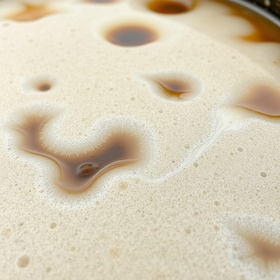
Why doesn't the sludge settle despite the low presence of filamentous fungi? This explains how to identify "viscous bulking," which is characterized by stickiness and lack of compaction, and discusses the drainage issues that can easily arise.
Viscous bulking is a phenomenon where activated sludge becomes sticky and difficult to settle. Bulking caused by filamentous bacteria has different causes and identification methods. ■ Few filaments, yet it won't settle! Even under a microscope, the filaments extending from the flocs are not very noticeable. Instead, undigested polysaccharides and EPS (extracellular polymeric substances) accumulate, increasing the stickiness of the sludge and causing it to become dispersed. As a result, it becomes difficult to settle in the sedimentation tank, and even when it does settle, it does not compact tightly. ■ What type of wastewater is it likely to occur with? It is believed to occur when treating wastewater that contains a lot of sugars with activated sludge. If nutrients like nitrogen are insufficient, the decomposition of polysaccharides may be delayed, or excessive EPS may be produced due to nutrient deficiency, leading to increased stickiness. In wastewater treatment at sake breweries, bulking with sticky foam has been reported, even though filamentous bacteria are few. ■ How to identify it? When it does not settle, first check the abundance of filaments under a microscope. If there are few filaments but it still does not settle, there is a possibility of viscous bulking. Also, check if the incoming water has sufficient nitrogen and phosphorus. Please feel free to consult us first.
basic information
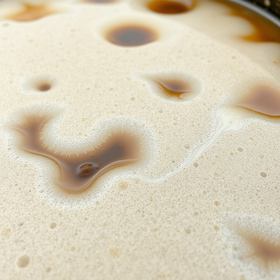
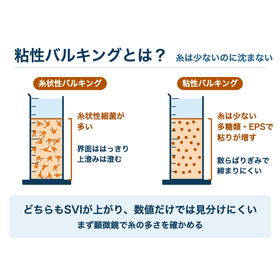
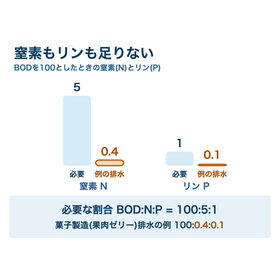
■Differences from Filamentous Bulking When comparing the two types of bulking, we find the following: 1. Filamentous Bulking: There are many filamentous bacteria. The sludge interface is clear, and the supernatant is also clear. 2. Viscous Bulking: There are few filamentous fungi, and the viscosity of the sludge increases. Both types show an increase in the Sludge Volume Index (SVI), which makes it difficult to distinguish between them based solely on numerical values, which is a troublesome aspect. ■Signs to Notice on Site The following changes may indicate the presence of viscous bulking: 1. Bubbles with viscosity appear in the aeration tank. 2. The sludge is somewhat scattered and does not settle easily. 3. The settled sludge does not compact, making it difficult for the volume to decrease at the bottom. ■Checking Nutrient Balance with Numbers Activated sludge requires nitrogen and phosphorus in the ratio of BOD:N:P = 100:5:1. In the case of wastewater from fruit jelly production, this ratio was found to be 100:0.4:0.1, indicating a significant deficiency in both nitrogen and phosphorus. By keeping track of the BOD of the inflow water along with the concentrations of nitrogen and phosphorus, it becomes easier to notice deficiencies.
Price range
Delivery Time
Applications/Examples of results
■The basic countermeasure is to review operating conditions! In wastewater with high sugar content, the following adjustments are suggested as measures to prevent bulking: 1. Nitrogen and phosphorus deficiency: Add the necessary amounts to balance them. 2. Load: Adjust the MLSS concentration and maintain the BOD-MLSS load within the range of 0.2 to 0.4 kg BOD/kg MLSS·d. 3. Oxygen: Maintain appropriate DO levels. In the case of sake breweries, examples of improvements through the addition of nitrogen and the use of agents to suppress bulking have been reported. ■Locations where bulking is likely to occur Wastewater from confectionery manufacturing, bread production, and juice production is prone to bulking due to sugars. There have also been reports from sake breweries. The characteristics of wastewater from confectionery manufacturing vary greatly depending on the product, and seasonal fluctuations are significant. ■Do not confuse with filamentous bulking! According to national documentation, measures to suppress filamentous bacteria, such as creating anaerobic sections, are suggested for filamentous bulking, while load adjustments are mentioned for non-filamentous (viscous) bulking. Different causes require different solutions. First, check for the presence of filaments under a microscope and take appropriate measures based on the cause. Please feel free to consult us.
catalog(3)
Download All Catalogs
Recommended products
Is there a "sweetness curve" in sweeteners? What are the differences in taste? 【Basic Knowledge】
トリイ










Why are preservatives necessary? What is the key to preventing food poisoning? 【Basic Knowledge】
トリイ







Distributors

Since our founding, we have continued to provide flexible services with the motto of accurately supplying a diverse range of products that respond to changes in the times and the diversification of consumer needs, tailored to various applications and requirements. With the corporate slogan "Chemical Engineering Partner," we, as a group of experts in chemical technology, actively discover ideas to solve our customers' problems from advanced technologies both domestically and internationally, and propose them.