
What is the pretreatment of RO pure water systems? From sand filtration to activated carbon.
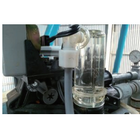
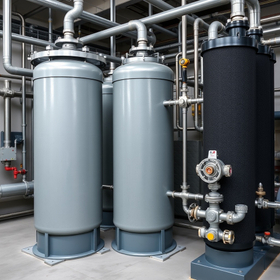
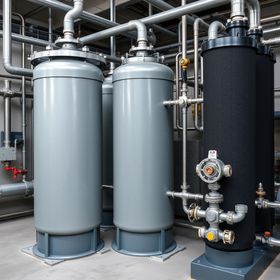
Pre-treatment involves removing impurities, chlorine, and scale components that can damage the membrane, right before the membrane itself. This explains the combination of roles and main equipment.
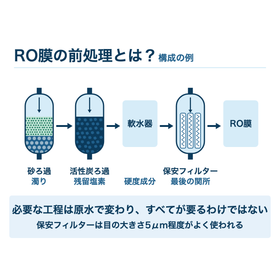
If raw water is passed directly through RO membranes or pure water systems, dirt can accumulate on the membrane, or the membrane can become damaged. Therefore, the process of conditioning the water before it reaches the main unit is called pretreatment. ■ What does pretreatment remove? The role of pretreatment can be broadly divided into three categories: 1. Turbidity (fine particles, etc.): Accumulates on the surface of the membrane and blocks it. 2. Oxidants (residual chlorine, etc.): Damages the membrane material. 3. Scale components (calcium, etc.): Concentrates and precipitates on the membrane surface. All of these can cause a decrease in membrane performance. ■ Just like preparing ingredients for cooking! Before the actual cooking, washing off dirt and removing impurities stabilizes the final result. Pretreatment is similar; it is the process of reducing the sources of dirt before they reach the membrane. Insufficient pretreatment can lead to increased membrane fouling, necessitating chemical cleaning. ■ The final checkpoint is just before the membrane At the end of the pretreatment, just before the membrane, a cartridge-type filter called a safety filter is placed to capture particles that could not be removed in the previous stages. The necessary processes vary depending on the raw water, and not all systems require the same components. Please feel free to consult with us first.
basic information
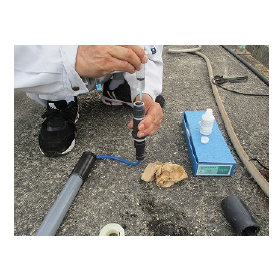
■Main Pretreatment Equipment 1. Sand Filtration: Water is passed through layers of sand and other materials to remove turbidity. 2. Activated Carbon Filtration: Removes residual chlorine. 3. Water Softener: Removes hardness components (such as calcium). 4. MF Membrane / UF Membrane: Filters out fine particles using membranes. 5. Security Filter: Captures fine particles just before the membrane. Security filters commonly use mesh sizes of about 5μm. ■There are also methods using chemicals! To remove residual chlorine, a reducing agent such as sodium bisulfite (sodium hydrogen sulfite) can be injected. Additionally, there are methods that involve adding chemicals (scale inhibitors) to suppress the formation of scale. ■Measuring Water's Susceptibility to Contamination: SDI SDI (Silt Density Index) is an indicator that shows how much fine turbidity is present that can clog membranes. It is determined by passing water through a filter with a pore size of 0.45μm at a constant pressure and measuring the rate of decline in filtration speed. The measurement method is specified by the ASTM D4189 standard. The upper limit is often set at less than 5, and some documents seek even lower values (around 3 or below) to minimize contamination.
Price range
Delivery Time
Applications/Examples of results
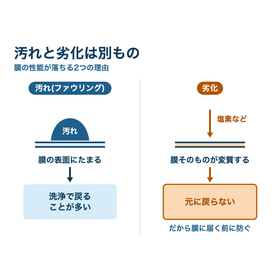
■Does the combination change with the source water? The configuration of the pretreatment changes depending on the quality of the source water. 1. Tap water: Since residual chlorine is maintained by law, a process to remove chlorine is necessary. 2. Water with high turbidity: To lower the SDI, the filtration process needs to be intensified. 3. Hard water: As a scale countermeasure, softening or the use of scale inhibitors should be considered. Even with the same equipment, the necessary processes differ if the source water is different. ■What happens if pretreatment is insufficient? When dirt accumulates on the membrane, the permeate decreases even at the same pressure, and the differential pressure across the membrane increases. To remove the dirt, chemical cleaning is required. ■Dirt and degradation are different things! There are two types of membrane performance decline. Dirt that accumulates on the surface (fouling) often returns to normal with cleaning, while degradation caused by substances like chlorine alters the membrane itself and cannot be reversed. This is why pretreatment that prevents issues before they reach the membrane is crucial. ■What should you check daily? The effectiveness of pretreatment can be seen from records. By regularly checking the differential pressure of the membrane, the permeate flow rate, and the SDI of the water entering the membrane, you can notice the progression of fouling early. Please feel free to consult with us first.
catalog(2)
Download All Catalogs

Recommended products

Is there a "sweetness curve" in sweeteners? What are the differences in taste? 【Basic Knowledge】
トリイ












Why are preservatives necessary? What is the key to preventing food poisoning? 【Basic Knowledge】
トリイ






Distributors

Since our founding, we have continued to provide flexible services with the motto of accurately supplying a diverse range of products that respond to changes in the times and the diversification of consumer needs, tailored to various applications and requirements. With the corporate slogan "Chemical Engineering Partner," we, as a group of experts in chemical technology, actively discover ideas to solve our customers' problems from advanced technologies both domestically and internationally, and propose them.